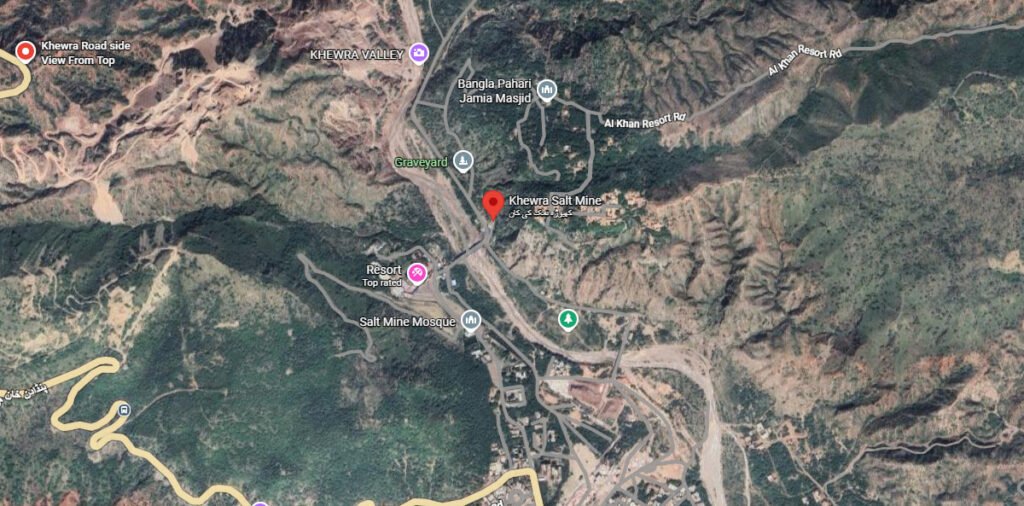
The word “Himalayan” on a salt label is everywhere on supermarket shelves in Germany, health stores in Los Angeles, e-commerce listings in Dubai. Most buyers who pick up that jar couldn’t locate the actual origin on a map. That gap matters, because authentic Himalayan pink salt comes from exactly one place on Earth: the Khewra Salt Range in Punjab, Pakistan.
Everything else labeled “Himalayan” is either sourced from that same range and re-branded further down the supply chain, or it isn’t genuine Khewra-origin salt at all.
The Geology That Makes It Different
Khewra’s salt deposits are Precambrian sea beds roughly 250 million years old, the compressed remains of an ancient inland sea that evaporated and was buried under geological pressure over millions of years. That age and formation process is what separates it from both sea salt and ordinary rock salt from younger, less isolated deposits.
Because the deposit formed and sealed long before industrial activity or modern ocean pollution existed, it carries no contamination from either source. This is also the basis for one of the most commercially useful claims in the category: sea salt harvested today, from any ocean, contains documented micro-plastic contamination — a finding confirmed across multiple peer-reviewed studies. Land-mined Himalayan pink salt has none. Brands in the EU, US, and Australian markets are already building clean-label positioning around that distinction, because it’s verifiable rather than a marketing embellishment.
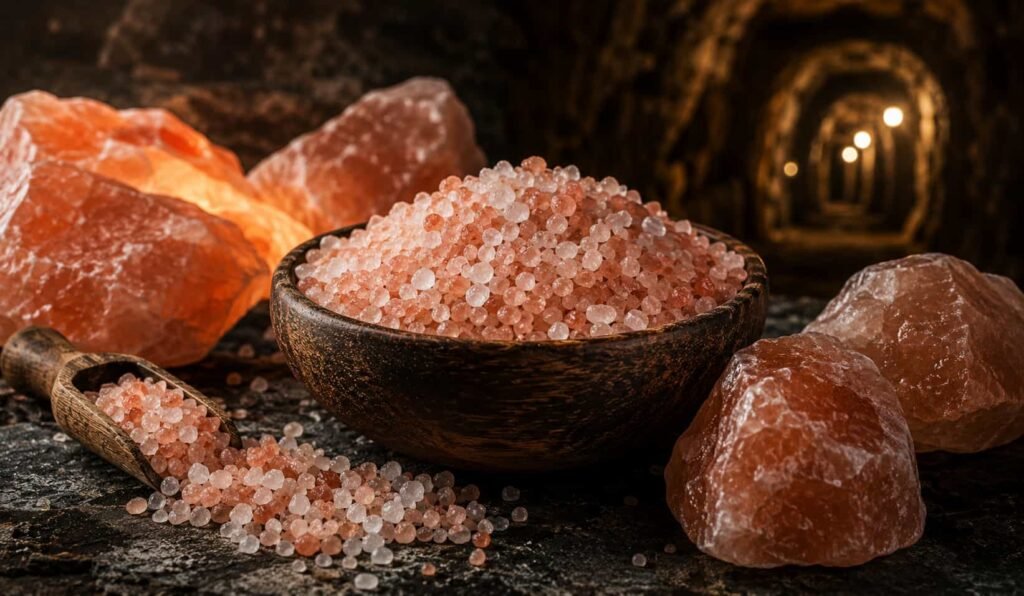
The pink color itself comes from iron oxide present in the crystal matrix. Alongside it sits a naturally occurring mineral spectrum — calcium, magnesium, potassium, iodine, zinc, bromine, and others, totaling 84+ trace minerals. These aren’t additives. They’re geological residue, locked into the salt at formation, which again explains why compositional specs are typically NaCl 98% minimum with the remaining roughly 2% carrying that mineral profile (alongside stringent processing specifications such as iron content no more than ~4 ppm and moisture limited to only a maximum of 0.2%).
Scale, Market, and Why Provenance Verification Matters
Khewra is no boutique operation. It is the second largest salt mine in the world, with approximately 40 km of tunnels and 19 working levels (essentially a city below ground). Exports of Himalayan pink salt, which produce around 350,000 metric tons annually worth nearly $120 million. The only origin producing real Himalayan pink salt at this commercial scale; therefore, worldwide supply of genuine Himalayan Pink Salt traces back through the single range of mountains although it could be packaged and sold elsewhere.
Demand reflects that concentration. The global market for Himalayan pink salt was valued to be $ 1.80 billion in the year 2025, and it is anticipated to reach a valuation of $2.34 billion by the end of the forecasted period growing at a CAGR of 5.39% during 2025-2030. Malaysia (27% of imports) and the USA (14%) are the two largest importing markets, with the UAE close behind. Food-grade culinary salt accounts for 86% of total market volume, though the fastest-growing formats right now are clean-label retail pouches for grocery, private-label wellness brand lines, and the lamp and décor segment.
That growth has also pulled in supply that isn’t genuinely Khewra-origin. Some products sold commercially as “Himalayan pink salt” are dyed rock salt or mislabelled substitutes from other regions entirely. For a private-label brand owner, Amazon seller, or wellness distributor, that’s a real sourcing risk — not just an ethics question, but a compliance and reputational one if a buyer’s own customers start asking questions about origin claims.
The document that resolves this is a certificate of origin issued through Pakistan’s Chamber of Commerce, confirming Khewra provenance for a given shipment. Harmain Global provides this certificate with every order, alongside processing under ISO 9001:2015 and ISO 22000:2018 certification, so buyers aren’t taking origin on faith.
Sourcing With Verified Origin
Whether you’re building a private-label salt line, stocking Himalayan pink salt for retail, sourcing salt lamps wholesale for the décor segment, or developing a private label salt program, the starting point is the same: confirm you’re actually sourcing from Khewra, not from a supplier three steps removed from it who can’t produce the paperwork.
Request a quote and ask for the certificate of origin alongside your first sample — it’s the fastest way to separate a genuine Khewra supplier from a re-labelled one.