Our Processing Standards
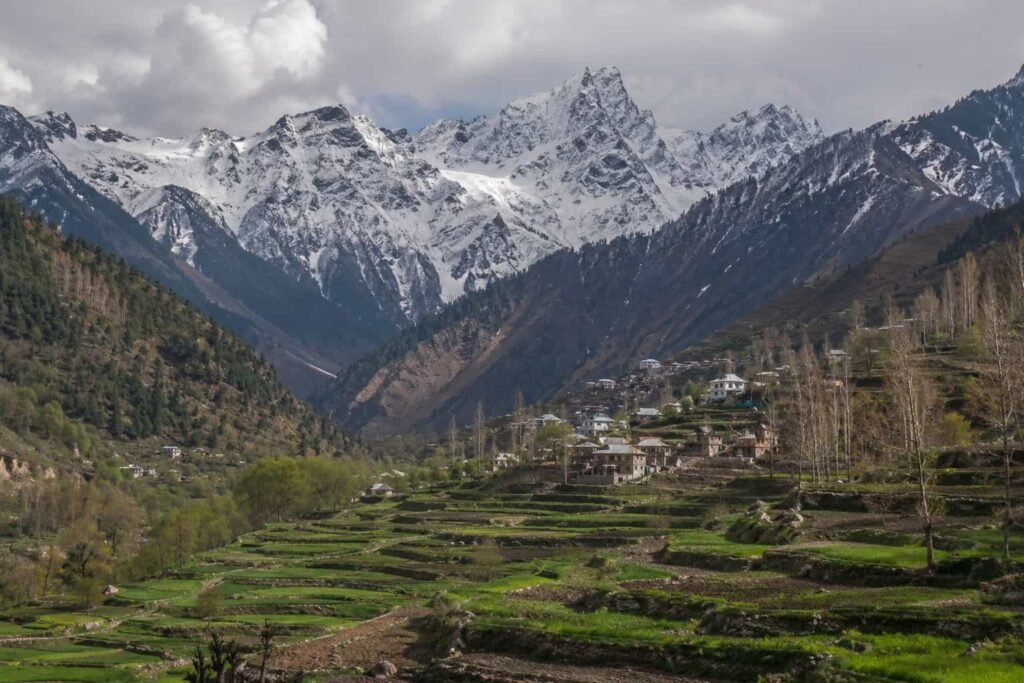
Every product Harmain Global exports begins in a verified growing region — Sindh’s river plains, Punjab’s agricultural belt, Swat’s mountain valleys, KPK’s highlands, or Gilgit-Baltistan’s altitude farms — and passes through a documented processing chain before it ever reaches a container. This is how we do it.
Sourced Across Multiple Agricultural Regions
We work directly with farm owners and cooperatives across Pakistan’s major growing regions, which gives us better quality control, stronger traceability, and the ability to act early when a crop needs attention.
Each region brings something different. Sindh’s fertile river plains are known for long red chilli, white sesame, black seed, dates, and dried mango. Punjab offers scale and variety, with Rice, sesame, black seed, herbs, and nuts from its plains and foothills. In Swat and Khyber Pakhtunkhwa, clean mountain air and pure water help produce high-potency herbs, wild botanicals, almonds, walnuts, and dried figs. Gilgit-Baltistan stands out for premium high-altitude dry fruits like sulphur-free apricots, mulberries, walnuts, pine nuts, and dry plums. Khewra, Punjab, gives us authentic Himalayan pink salt, hand-mined from one of the world’s oldest salt deposits. We also work with verified suppliers in Afghanistan for select dried fruits, resins, and medicinal herbs.
Most of our products are naturally pesticide-free or organically grown by nature and tradition. For certified organic requirements, we maintain documented supply chains with full traceability.
- Farm-Direct Sourcing
- HACCP Processing
- Aflatoxin Controlled
- EU & FDA Compliant
- Pesticide-Free Verified
- No Artificial Colour
- Heavy Metal Tested
- Since 1985
-Our Processing Chain
Seven Steps from Farm to Export-Ready Container
This is not a generic processing description — it is the actual sequence every Harmain Global shipment passes through. Each step addresses a specific quality or safety risk that causes border rejections, buyer complaints, or test failures in the global herbs and spices trade.
1. Farm-Direct Procurement & Pre-Harvest Inspection
We do not buy from wholesale commodity markets where product origin becomes untraceable after multiple middlemen. We work directly with farm owners who have established fields and ongoing relationships with Harmain Global — some spanning multiple growing seasons. Before harvest, our team or a designated field agent inspects growing conditions: crop health, absence of visible disease or pest damage, irrigation water quality, and farming practices (pesticide use, drying methods planned). For dry fruit orchards in Gilgit-Baltistan and Swat, this inspection includes confirming that no sulphur dioxide will be used in post-harvest drying. For sesame and chilli in Sindh, it includes confirming IPM practice and absence of banned pesticide application in the pre-harvest window.
Every farm origin is documented. The product origin trace starts here — at the field — not at our warehouse.
2. Harvest & Primary Drying — The Critical Safety Window
The most common cause of aflatoxin contamination in spices and herbs globally is poor post-harvest handling in the first 72 hours after harvest. Research consistently shows that aflatoxin-producing fungi (Aspergillus species) proliferate when moisture remains above 12–14% and temperature is between 25–33°C — exactly the conditions of freshly harvested product left on soil surfaces or in damp storage. This is the step where most exporters fail, and where Harmain Global intervenes.
We require contracted farmers to dry on elevated platforms or clean concrete surfaces — never directly on soil. For sun-drying, product must be spread in thin layers to allow airflow on all sides. Mechanical drying (where available) is encouraged to bring moisture down rapidly and uniformly. We do not accept product that has been rained on during drying or stored in damp conditions before reaching our facility. Moisture is spot-checked at collection using handheld moisture meters before the product is accepted into our vehicles.
3. Intake at Harmain Global Warehouse — Receiving Inspection
When product arrives at our warehouse in Hyderabad, it undergoes a formal receiving inspection before it is accepted into clean storage. This is not optional — every lot, every time. A visual inspection assesses colour uniformity, absence of visible mould, absence of unusual odour (which can indicate aflatoxin contamination before lab confirmation), foreign matter level, and general condition. A representative sample is drawn for moisture testing using a calibrated meter. If any parameter falls outside our acceptance limits, the lot is rejected or quarantined pending further assessment.
Accepted product is tagged with a batch identifier — lot number, farm origin, collection date, moisture reading — and stored in our clean, dry, temperature-monitored warehouse. Rejected lots are not allowed to enter the processing stream. They are documented and returned.
4. Cleaning, Sorting & Grading — The Core of Export Processing
This is where the difference between export-grade and local-market product is made. Raw agricultural product — even from a good farm — contains foreign matter: dust, stems, stones, soil particles, damaged pieces, off-colour units, insects, and miscellaneous plant debris. An international buyer in Germany or the UAE will test for foreign matter, and EU standards (American Spice Trade Association cleanliness specifications) set clear limits — typically ≤0.5% for premium herb and spice exports.Our processing sequence depends on the product but follows a consistent logic: remove everything that should not be there, grade what remains, verify the result.
Destoning: gravity or mechanical separation removes stones, soil clumps, and heavy debris.
Winnowing / air separation: removes light dust, chaff, and hollow seeds
Sieving / screening: separates by particle size; removes undersized or oversized pieces
Colour sorting (Sortex): optical colour sorters identify and remove off-colour, discoloured, or damaged units — critical for sesame, black seed, dry fruits, and spices where colour uniformity affects buyer acceptance
Hand-sorting: for premium grade products (Grade A whole pods, premium nuts, dry fruits) final manual inspection removes any remaining off-grade pieces that machines miss
Destalking: stems and stalks removed to meet ≤1% stalk content specification (chilli, herbs)
Hulling (sesame): mechanical hull removal for hulled sesame grade — no chemicals used
After cleaning and sorting, the product is re-checked for moisture and sampled for colour/grade assessment before moving to packaging. Foreign matter is measured against the target specification for the buyer's required grade.
5. Pre-Shipment Laboratory Testing — Every Batch, Every Time
Cleaning and sorting removes physical contamination. Laboratory testing addresses the invisible contamination that can still cause an EU or FDA border rejection — aflatoxins, pesticide residues, heavy metals, ochratoxin A, microbial pathogens, and in some products, ethylene oxide residues.
The EU's food safety system (RASFF — Rapid Alert System for Food and Feed) reports thousands of border rejections annually from spice and herb exporters across multiple origins. The most common reasons: aflatoxin B1 over 5 µg/kg, pesticide residues exceeding MRL, and Salmonella contamination. These are not issues that look different from the outside — product can appear perfect while failing on aflatoxins or invisible pesticide residues. This is why no product leaves our facility without a third-party laboratory CoA covering the full panel relevant to its destination market.
We use ISO/IEC 17025-accredited laboratories — the standard specified by EU Regulation 2019/1793 for official control testing of herbs and spices imports. Results from non-accredited labs are not accepted by EU border inspection posts and may not be accepted by professional buyers' compliance teams.
6. Packaging — Moisture Barrier, Metal Detection, Labelling
Packaging is not just a container — it is the final line of quality protection between our processing facility and your customer. Poor packaging decisions undo everything upstream: jute bags allow moisture ingress and promote aflatoxin development during transit; improperly sealed pouches lose vacuum and allow oxidation; unlabelled or incorrectly labelled packages fail customs inspection and get rejected at the port of entry.
Every product line at Harmain Global is packed using moisture-barrier inner liners heat-sealed before outer packaging. For products at risk of aflatoxin contamination during storage or transit (chilli, peanuts, certain spices), HDPE-inner lined bags significantly reduce moisture transfer — research shows that aflatoxin levels in HDPE-packaged spices remain consistently lower than in jute packaging under the same storage conditions. Salt lamps and decorative products are individually boxed. Pharmaceutical-grade botanicals are vacuum-sealed. Premium dry fruits are vacuum-packed in laminated bags to preserve volatile aroma compounds and natural colour.
Inline metal detection is applied on processed food-grade products before final sealing — detecting ferrous, non-ferrous, and stainless steel fragments. Any pack that triggers the metal detector is automatically rejected from the line and removed. This is a critical GMP requirement for EU and FDA food-grade ingredient export.
7. Export Documentation & Container Loading
A product that passes every quality test can still be detained at the border because documentation is incorrect. Export documentation errors — wrong HS code, missing phytosanitary certificate, incorrect weight on commercial invoice, absent Certificate of Origin — are a consistent cause of shipment delays and demurrage charges. We prepare all documentation in-house before container loading, and it is reviewed against destination-country requirements before the container is sealed.
Container loading is inspected: we verify that only cleared, documented, correctly packed product enters the container. No last-minute substitutions. No mixing of batches without declaration. The container is sealed at our facility — not at the port — and the seal number is documented in the shipping papers. Real-time tracking information (vessel name, BL number, container number, estimated arrival) is shared immediately upon departure.
– Standards & Certifications
The Standards Our Processing Is Built Around
We do not just reference these standards in marketing material — our processing protocols are actively built around them, because they represent what our buyers’ compliance teams and destination-country border agencies actually check for.
🏅 ISO Compliant
Food Safety Management System. Covers hazard identification, critical control points, and preventive controls across sourcing, processing, and export operations.
🏛️ FDA Registered Facility
Registered with the US FDA for food and dietary supplement exports. Compliant with FSMA requirements for US-bound shipments.
☪️ Halal Certified
Certified for distribution across all Muslim-majority markets — GCC, Southeast Asia, UK halal retail. Required for UAE, Saudi Arabia, Malaysia, and Indonesia import clearance.
🌿 Organic Certified
EU Organic and USDA NOP-aligned certification available for applicable product lines. Full chain-of-custody documentation from farm registration to export container.
🇨🇳 GACC Registered
Registered with China's General Administration of Customs for direct export to Chinese food manufacturers and distributors.
🔬 HACCP
Hazard Analysis & Critical Control Points. Applied to every processing stage — identifies the specific points where biological, chemical, and physical contamination risks must be controlled.
📋 Codex Alimentarius
We follow the Codex Code of Hygienic Practice for Low Moisture Foods (CXC 75-2015) and the IOSTA Good Agricultural Practices guidelines for spices and culinary herbs.
🧪 ISO/IEC 17025 Labs
All testing conducted by ISO/IEC 17025-accredited laboratories — the standard required for official EU border control and accepted by FDA, GCC, and professional buyer compliance teams.
🌍 EU GSP+ & UK DCTS
Pakistan's export status under EU GSP+ and UK Developing Countries Trading Scheme gives buyers in Europe direct tariff advantages when sourcing from Harmain Global vs competing origins.
– Laboratory Testing
What We Test for Before Any Shipment Leaves
The test panel below represents what EU, UK, US, GCC, and China buyers and their customs authorities actually check. Any parameter that fails at the border results in rejection, destruction, or re-export at the exporter’s cost. We test everything before the container is sealed — not after.
🦠 Mycotoxins
Aflatoxin B1 — EU limit ≤5 µg/kg
Total Aflatoxins (B1+B2+G1+G2) — EU ≤10 µg/kg
Ochratoxin A — EU ≤15 µg/kg (spices)
Tested by HPLC-FLD / LC-MS/MS (ISO/IEC 17025 lab)
Most common cause of EU border rejection in spices
🧫 Microbial Safety
Salmonella — absent in 25g (n=5 samples)
E.coli — absent in 25g
Total Plate Count (TPC) — ≤10⁵ CFU/g
Yeast and mould count
Compliant with Codex CXC 75-2015 (low moisture foods)
💧 Physical & Quality Parameters
Moisture content — per product specification
Foreign matter — ≤0.5% premium / ≤1% standard
ASTA colour value (chilli, paprika)
Pungency / capsaicin (SHU / HPLC) — chilli
Thymoquinone % — black seed
Oil content and FFA — sesame, black seed oil
Particle size / mesh — powders and flakes
🌾 Pesticide Residues
EU MRL multi-residue panel — 500+ compounds
Organic lots: not-detected target across full panel
Ethylene oxide — sesame seeds (EU requires ND)
IPM practices at farm level reduce residue risk
Results documented in CoA per batch
⚗️ Heavy Metals & Chemical Safety
Lead (Pb) — EU Regulation EC 1881/2006 limits
Arsenic (As), Cadmium (Cd), Mercury (Hg)
PAH (Benzo[a]pyrene) — spices ≤10 µg/kg
Sudan Red (chilli products) — absent
Polycyclic aromatic hydrocarbons — total ≤50 µg/kg
📦 Packaging Integrity
Inline metal detection — ferrous & non-ferrous
Seal integrity testing
Moisture vapour transmission rate (WVTR) — salt
Drop resistance — retail packs
Label accuracy verification per destination requirements
HS code validation per product & market
– Our Standards: what we refuse
Processing Practices We Do Not Use — And Why It Matters
The global herbs, spices, and natural product trade has well-documented quality and safety problems. Many of them are caused by specific processing shortcuts that compromise product integrity, trigger EU and FDA border rejections, and harm end consumers. We do not use any of the following.
✗ No Sulphur Dioxide (SO₂) Treatment
Sulphur dioxide is used by some processors to bleach dried fruit to an artificially bright colour, most visibly in apricots (orange = sulphured; natural = dark brown). It masks inferior quality, triggers EU RASFF alerts, and is banned in organic-certified products. All our dried fruits are sulphur-free, verified by lab test, and supplied with a signed SO₂-free declaration.
✗ No Synthetic Dyes or Added Colour
Sudan Red and other synthetic dyes are used to artificially boost colour in chilli powder and paprika. This is illegal in every major market, causes liver and kidney damage, and has triggered major EU recalls. We test every batch of chilli product for Sudan Red. Absent. Confirmed in CoA.
✗ No Adulteration or Variety Mixing
Mixing cheaper varieties with premium varieties (Siam Benzoin with Sumatra, organic product with conventional) without declaration is common in commodity trading. We never mix varieties or grades without explicit buyer approval, and every lot is documented to its source farm and variety.
✗ No Ground-Surface Drying
Drying harvested product directly on soil is the primary cause of aflatoxin contamination in spices globally. Soil contains Aspergillus fungal spores; contact during the moist post-harvest window allows rapid colonisation and toxin production. We require elevated-platform drying from all contracted farmers and inspect compliance before accepting product.
✗ No Ethylene Oxide Fumigation
Ethylene oxide is a chemical fumigant used for microbial decontamination of spices. It was banned in the EU in 2020, and it triggered hundreds of EU RASFF alerts from sesame seeds in 2020–2022, predominantly from Indian-origin product. We do not fumigate with ethylene oxide at any stage. Our sesame seeds are tested for ethylene oxide residues, which must be not-detected under EU Regulation (EC) 396/2005.
✗ No Untested Lots Released for Export
Releasing product for export without a current, batch-specific Certificate of Analysis from an accredited laboratory is a common shortcut that leads to border rejections. Every Harmain Global commercial shipment carries a batch-specific CoA. Samples taken from the lot that is being shipped — not a reference sample from a different batch.