Ephedra Herb (Ma Huang) Bulk Export
Wild-harvested ephedra herb (Ephedra Sinica) from Pakistan’s high-altitude mountain regions. Regular cut and short cut grades. 0.8–1.5% alkaloid content (ephedrine + pseudoephedrine). SGS and Bureau Veritas certified. Pharmaceutical, TCM, and research buyers. 70% market share in South Korea. FOB Karachi.
Pakistan's Wild-Harvested Ephedra — From High Altitude Mountain Regions
Ephedra herb — known as Ma Huang (麻黄) in Traditional Chinese Medicine, and as Somlata, Uthang, or Asmani Booti in Pakistani regional tradition — is one of the oldest documented medicinal plants in the world. The aerial parts (dried green-brown stems and twigs) of wild-growing Ephedra Sinica species found in Pakistan’s mountains contain naturally occurring alkaloids — primarily ephedrine and pseudoephedrine — that have defined the herb’s pharmacological use in both traditional and modern medicine for millennia.
What makes Pakistani ephedra commercially significant is its origin. Pakistan’s high-altitude mountain zones — Balochistan’s arid plateaus, Khyber Pakhtunkhwa’s rugged highland terrain, and Gilgit-Baltistan’s remote valleys — create the specific combination of elevation, low humidity, mineral-rich soil, and temperature stress that drives alkaloid accumulation in wild Ephedra. This is not cultivated material. It is wildcrafted, sustainably harvested by communities with generational knowledge of these landscapes, and collected at the right stage of plant maturity to ensure the 0.8–1.5% alkaloid content that pharmaceutical and TCM buyers require for consistent downstream formulation.
Harmain Global has been the primary Pakistani ephedra exporter supplying these buyers since 1985. Our 70% market share in South Korea — a highly quality-conscious pharmaceutical and supplement market — was not achieved through competitive pricing alone. It was earned through consistent alkaloid profiles, complete SGS and Bureau Veritas certification, and the kind of documentation reliability that pharma procurement teams demand from a controlled-substance precursor.
- Wild-Harvested — Not Cultivated
- 0.8–1.5% Alkaloid Content
- Regular Cut & Short Cut
- E. Sinica · E. intermedia
- SGS / Bureau Veritas
- Custom Mesh Available
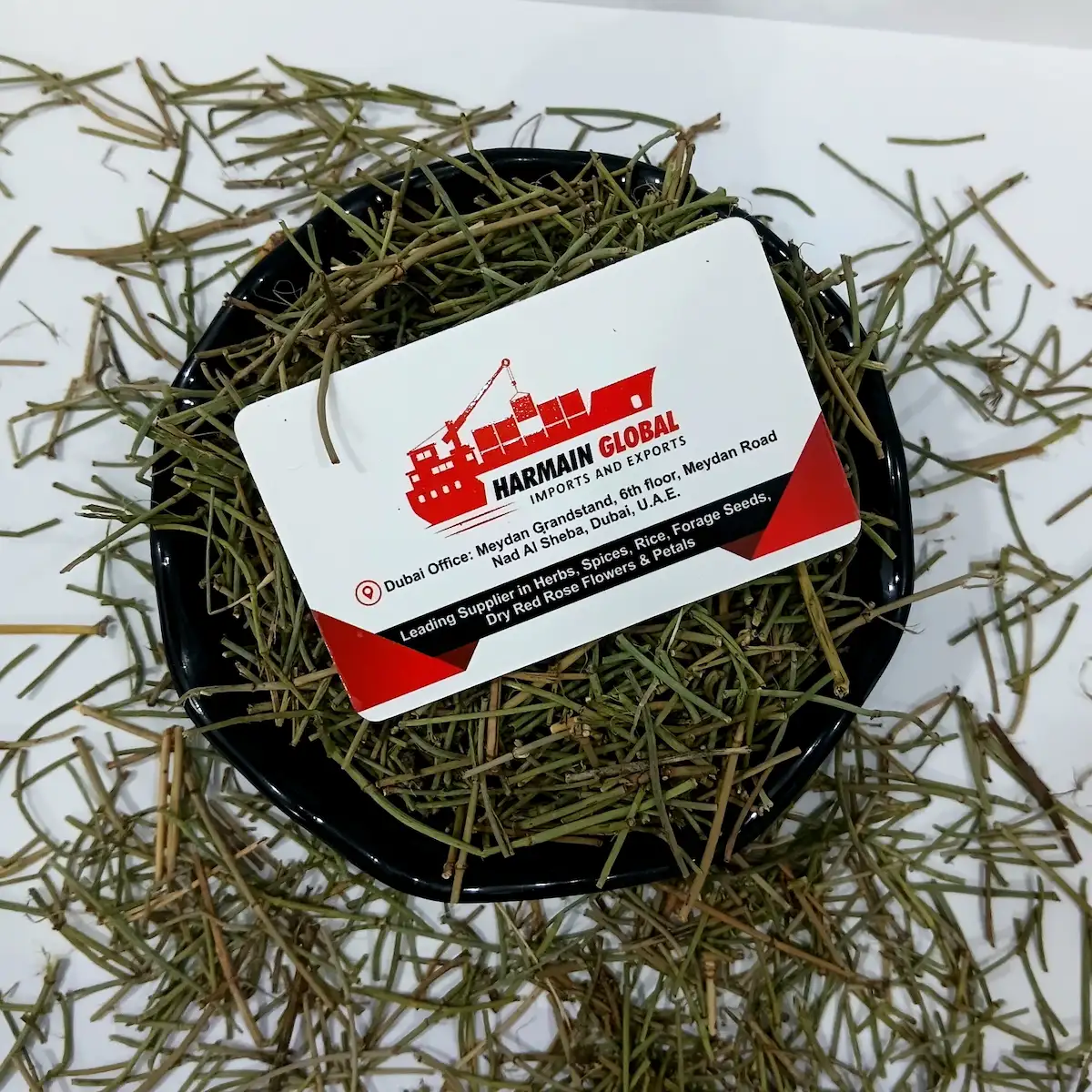
Ephedra Herb Products
 Quick View
 Quick View
-Regulatory Context
A Licensed, Quota-Based Trade — What Buyers Need to Know
Ephedra is classified differently from standard botanical herbs. Its alkaloids — ephedrine and pseudoephedrine — are listed as Table I precursor chemicals under the 1988 UN Convention Against Illicit Traffic in Narcotic Drugs and Psychotropic Substances, because they are the natural feedstock for methamphetamine synthesis. This is a specification fact, not a restriction on legitimate trade — it is the reason the commodity is regulated through quota and licensing systems rather than through ordinary agricultural export channels.
What This Means in Practice
Ephedra herb (HS 1211.50) is a small, niche, documentation-heavy trade. Global trade value is approximately USD 10–11 million per year across all countries combined — a volume that reflects the narrow, specific buyer base (pharma extractors, TCM formulators, research institutions) rather than commodity-scale demand. The documentation infrastructure is the real barrier to entry — most B2B directory listings cannot supply compliant shipments because they lack the government registration, annual NOC, and export quota authorization required to move this material legally.
Harmain Global holds all required Pakistan-side authorization: Ministry of Narcotics Control (MNC) registration, current-year No-Objection Certificate (renewed annually with ANF ground-check verification), and shipment-specific export quota/authorization. We have operated under this framework since before many current regulatory requirements were formalized. This is what "40 years of export experience" means for this specific commodity.
Buyer responsibility: Import authorization requirements exist in most destination countries — pharma buyers and TCM processors typically hold the necessary import permits and end-user certificates as part of their business license. We provide the full Pakistan-side documentation package; your local import permit is your responsibility to confirm before ordering. We will advise on what destination-country documentation we have seen required by buyers in your market based on our experience.
-Product Grades
Two Export Grades — Regular Cut & Short Cut
Both grades originate from the same wild-harvested material and carry the same alkaloid specification. The difference is cut length — which determines which downstream application the material suits.
Ephedra Regular Cut (Ma Huang Regular)
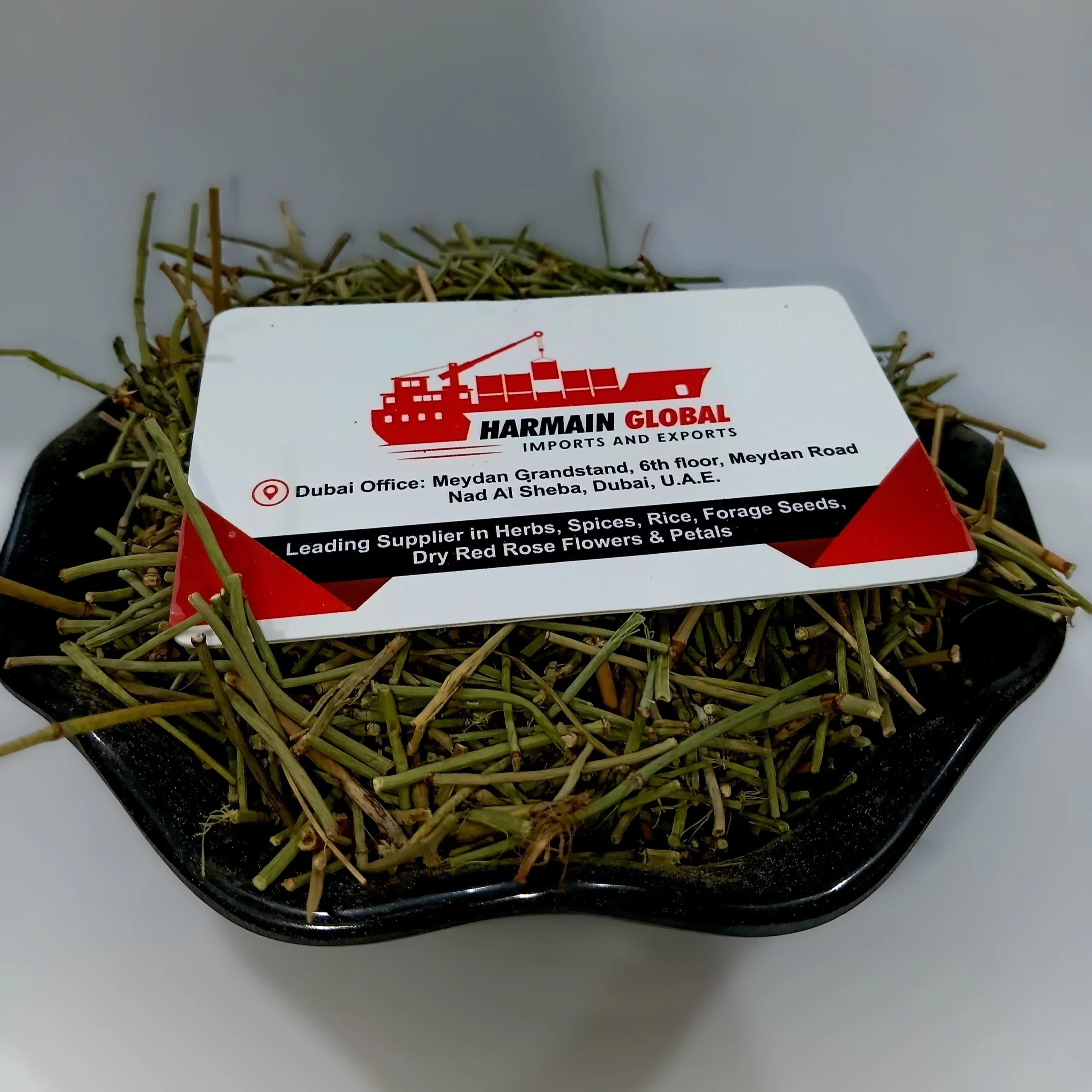
Stem length retained at 5–10 cm. The natural joint-pine stem structure is preserved, which suits buyers who are processing in-house, preparing traditional decoction-style preparations, or supplying TCM markets where longer stem presentation is commercially expected. Also preferred for retail-adjacent packing in Asian markets where the visible stem form signals authenticity. Less refined than short cut, slightly higher natural variability in stem diameter — which is characteristic of wild-harvested material and valued in traditional medicine contexts.
Ephedra Short Cut (Ma Huang Short Cutting)
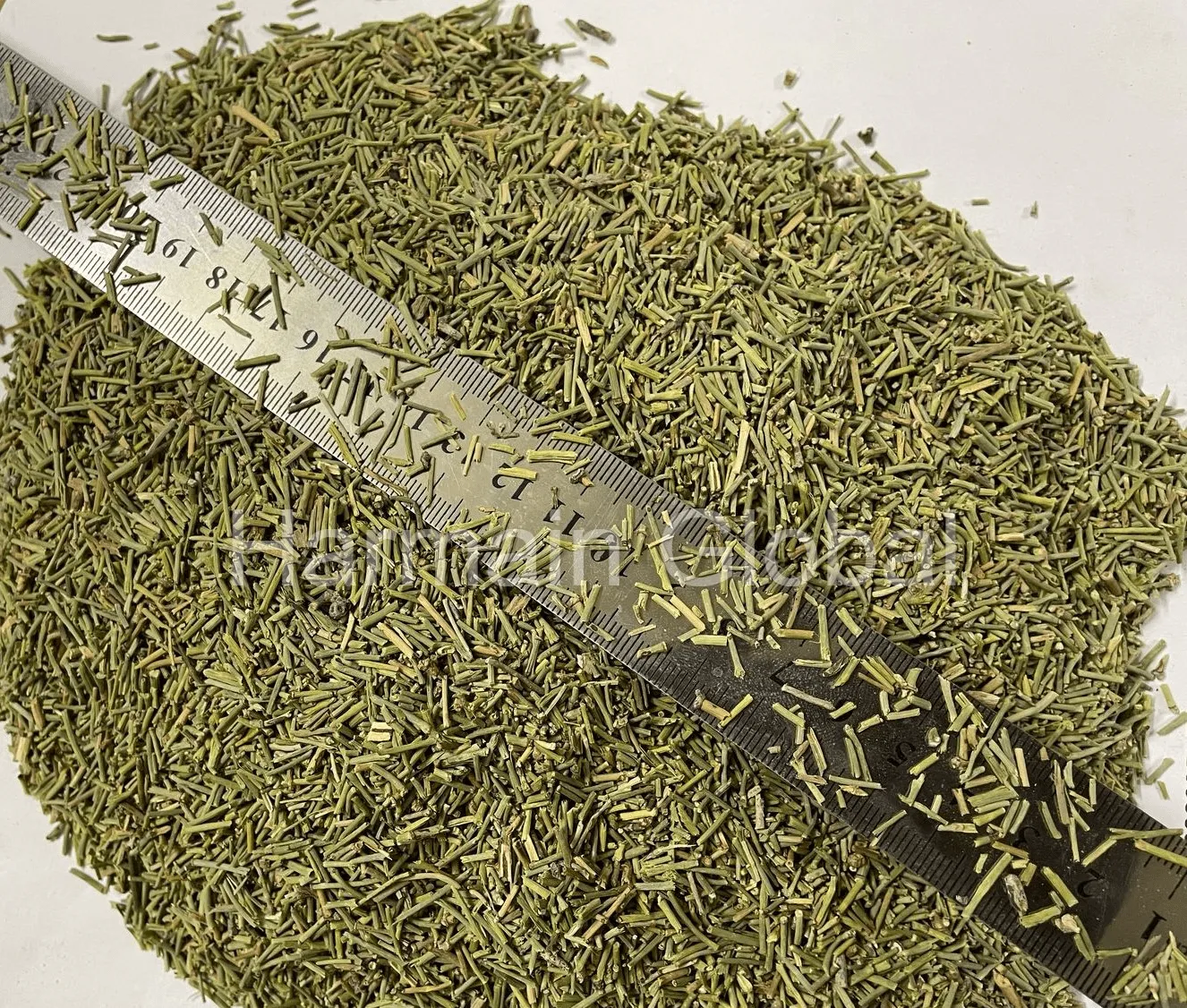
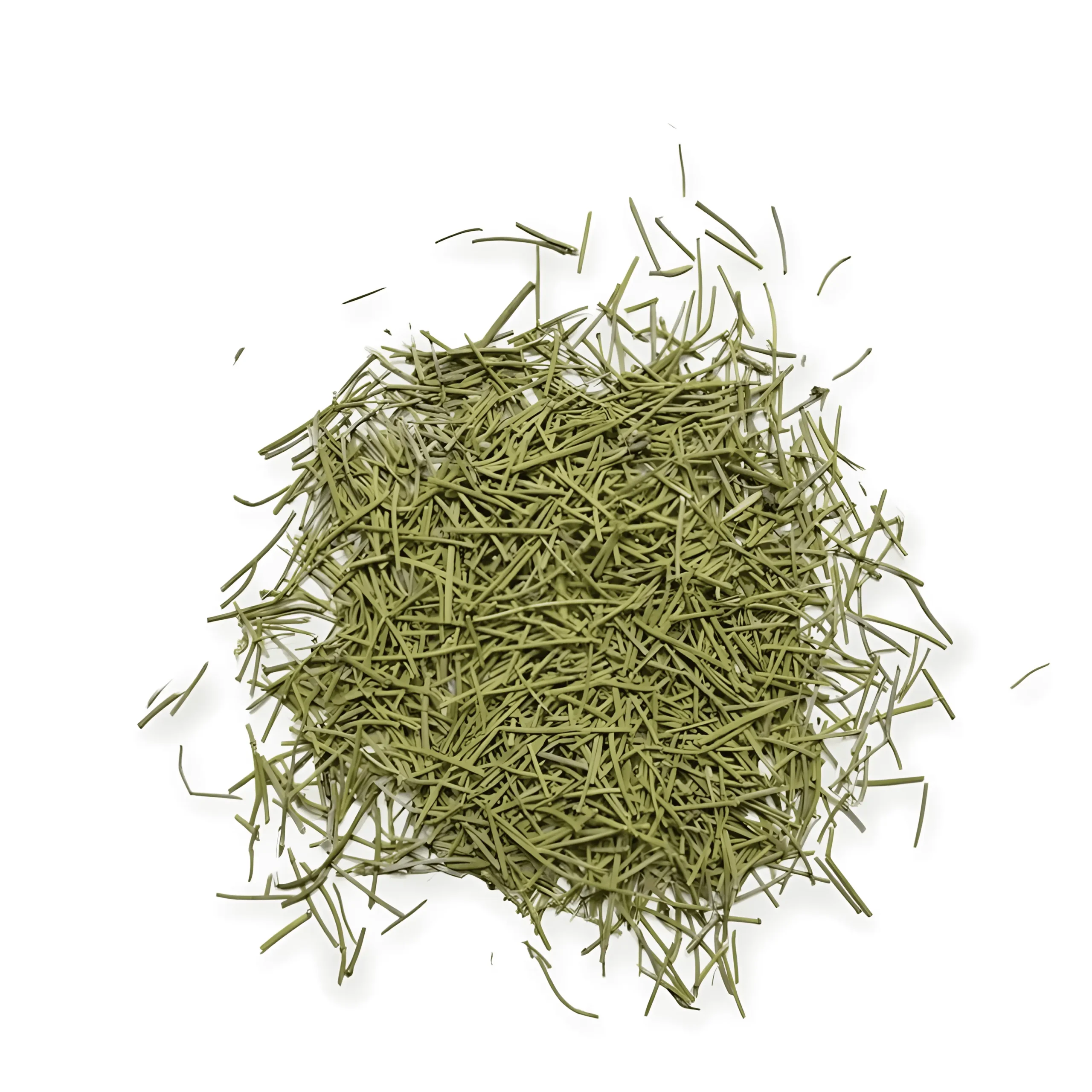
Precision cut to 1–3 cm uniform particle size. This grade is purpose-built for pharmaceutical extractors and supplement manufacturers who require consistent particle geometry for automated extraction equipment. Uniform particle size produces consistent surface-area-to-volume ratios, which directly affects extraction efficiency and batch-to-batch alkaloid yield. Also suited to encapsulation lines that require consistent feedstock density. Additional processing during cutting reduces foreign matter to below 1%. The number-one choice for companies manufacturing capsules, tablets, tinctures, or running solvent-extraction processes at scale.
Custom processing also available: Ultra-fine grinding, specific mesh sizes, and custom sieving for research applications, aerosol products, and specialized tincture manufacturing. Contact us with your particle size specification and we will assess feasibility with our processing team.
– Harvest & Processing Chain
From Mountain Harvest to Your Facility — Our Six-Stage Process
Every stage from collection to container is documented — because with a precursor-regulated commodity, the documentation chain is as important as the product quality itself.
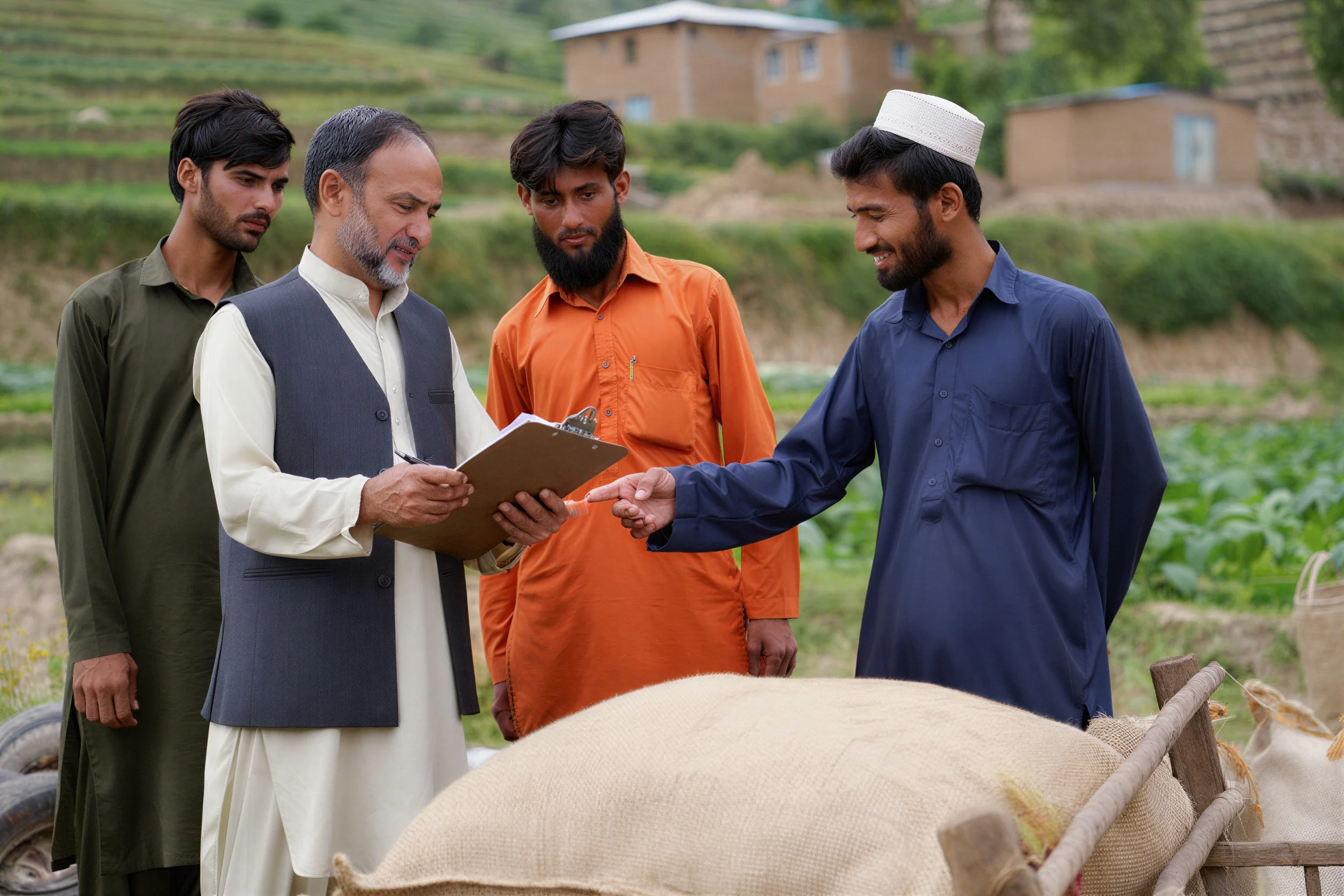
1. Sustainable Wild Harvesting — Balochistan & KPK
Ephedra is not cultivated. It grows wild in Pakistan’s high-altitude arid mountain zones — Balochistan, Khyber Pakhtunkhwa, Gilgit-Baltistan, and Chitral — where elevation, mineral-rich soil, and temperature stress drive alkaloid accumulation. Harmain Global works with the same harvester communities that have been collecting these plants for generations. Our field supervisors inspect collection areas before harvest begins, ensuring that only mature plants are taken and adequate vegetation is left for regeneration. Sustainable harvesting is not a marketing claim — it is the only way to maintain a supply source in a wildcrafted trade where overharvesting destroys the resource permanently. Newly harvested ephedra reaches our receiving stations within 24 hours of collection, preventing moisture buildup and ensuring colour and potency are retained from the point of harvest.
2. Initial Cleaning & Hand-Sorting — Hyderabad Facility
At our Hyderabad processing facility, every incoming batch is hand-inspected by trained personnel. This is manual sorting — people who know what pharmaceutical-grade and TCM-grade ephedra looks like, removing extraneous plant material, stones, damaged stems, and off-colour pieces. Wild-harvested botanicals inherently carry more field debris than cultivated crops; hand-sorting is the only reliable method to bring this to specification. The sorted material is then graded: regular cut (5–10 cm stems retained) or precision short cut (1–3 cm uniform particle) depending on buyer order specification. Both grades receive identical quality treatment — only the cut length differs.
3. HPLC Alkaloid Testing — The Critical Quality Gate
Alkaloid content is the primary specification parameter for every ephedra buyer. Ephedrine and pseudoephedrine levels vary naturally by species, location, season, and plant age — a supplier who is not testing is asking you to accept inconsistent raw material into a formulation that requires batch-to-batch consistency. We quantify ephedrine, pseudoephedrine, and related alkaloids by HPLC (High-Performance Liquid Chromatography) — the gold standard method that produces precise percentage figures, not estimates. Your CoA documents the exact alkaloid profile of your specific batch, with individual ratios — not just total alkaloid content. This is the data your formulation team needs to design with confidence.
4. Full Safety Testing — SGS & Bureau Veritas
Beyond alkaloid content, every export batch is tested for the full safety panel required by pharmaceutical, TCM, and regulated-market buyers: microbial safety (Total Plate Count, Yeast & Mould, E.coli, Salmonella — to British Pharmacopoeia standards), aflatoxins (risk in stored botanical material if moisture management is poor), heavy metals (Pb, As, Cd, Hg — results typically well below detectable limits from remote unpolluted harvest areas), and pesticide residues (not detected — wild-harvested material is never exposed to agricultural chemicals, and we test to confirm and document this for EU and health-conscious buyers). All testing is conducted by SGS Pakistan or Bureau Veritas — the two internationally recognized independent certification bodies whose reports are accepted by customs, pharmaceutical regulators, and quality control departments without challenge worldwide.
5. Packaging — Pharma-Compatible Formats
Regular cut is packed in food-grade moisture-resistant inner bags inside heavy woven PP jute outer bags (25–50 kg). Short cut is packed in sealed, labelled bags or drums with batch codes and CoA attached per lot — pharma-compatible format that meets the traceability and storage requirements of pharmaceutical facility intake procedures. Each pack carries net weight, batch number, harvest date, species, origin, and exporter contact. Inner bag heat-sealed before outer packaging to prevent moisture ingress during transit across varying climates. Alternative packing formats (polypropylene bags, cardboard cartons) available on request based on your warehousing and handling equipment requirements.
6. Export Documentation — Full Precursor Compliance Stack
The documentation package for an ephedra shipment from Harmain Global includes every layer of the compliance stack: Ministry of Narcotics Control Registration Certificate (firm-level, permanent), current-year No-Objection Certificate (ANF-verified, renewed annually), shipment-specific export quota/authorization, Certificate of Analysis (HPLC alkaloids + full safety panel, SGS or BV signed), Phytosanitary Certificate (Pakistan Department of Plant Protection), Certificate of Origin (Chamber of Commerce — for applicable trade agreements), Commercial Invoice (HS 1211.50, correctly described), Packing List (batch numbers per unit), and Bill of Lading. Additional certificates — fumigation, non-GMO declarations, or destination-country specific documents — arranged on request. Our export documentation team has been handling Pakistan customs clearance since before many current requirements were formalized.
– Certifications & Authorizations
The Compliance Stack That Separates Legitimate Suppliers from Directory Listings
Most B2B listings for Pakistani ephedra cannot supply a compliant commercial shipment because they lack one or more of the following authorizations. Harmain Global holds and maintains the complete stack.
FDA Registered Facility
FDA-registered for food and dietary supplement exports to the USA. Compliant with FSMA. FDA food-contact packaging (EC 1935/2004 equivalent) documentation available.
ISO Certified
Food Safety Management System covering all processing operations. Required by pharmaceutical and food-grade buyers as baseline quality management documentation.
Halal Certified
Halal certification for GCC and Muslim-majority market distribution. Required by buyers in UAE, Saudi Arabia, Malaysia, and Indonesia.
GACC Registered
Registered with China's General Administration of Customs for direct export to Chinese food manufacturers, wellness brands, and distributors.
Phytosanitary Certificate
Issued by Pakistan Department of Plant Protection per shipment. Mandatory for all plant-material exports — confirms freedom from quarantine pests and compliance with destination-country plant health requirements.
SGS / Bureau Veritas
Third-party alkaloid quantification (HPLC), microbial, heavy metal, pesticide, and aflatoxin testing. Globally recognized — accepted by pharmaceutical regulators and customs without challenge.
– Buyer Industries
Who Buys Pakistani Ephedra — and What They Use It For
This is a narrow, specific buyer base — not a mass-market commodity. Understanding which segment applies to you determines which grade, cut, and documentation package is right for your order.
Pharmaceutical Manufacturers
Licensed pharma companies extracting ephedrine and pseudoephedrine under quota for registered decongestant, bronchodilator, and anesthesia-support drugs. Require HPLC CoA, consistent alkaloid %, and full precursor documentation chain. Key markets: South Korea (our primary), Europe, GCC, North America.
TCM / Herbal Formulators
Traditional Chinese Medicine manufacturers and herbal formulators using Ma Huang in respiratory and cold/flu formulations. Active in China, Taiwan, South Korea, Vietnam, Hong Kong. Prefer regular cut for traditional decoction preparation. Long-standing buyers with high quality standards.
Research Institutions
University pharmacognosy departments, pharmaceutical R&D labs, and natural product research institutions requiring authenticated, tested botanical material with full traceability. Typically smaller volumes but high documentation requirements. Global.
Licensed Nutraceutical Processors
In limited markets where ephedra alkaloid supplements remain permitted under strict dosing rules — primarily certain Asian markets. Note: US, Canada, and most EU jurisdictions closed retail/dietary supplement routes after 2004 FDA action. Buyers in these markets require pharma extraction or TCM license, not consumer supplement framing.
Traditional Medicine Distributors
Middle Eastern, South Asian, and Ayurvedic traditional medicine markets where ephedra has a documented history of therapeutic use for respiratory conditions. Regular cut preferred. GCC and Southeast Asia are active markets with Halal requirements.
Export Trading Houses
Licensed trading companies in transit markets (UAE, Hong Kong) who purchase bulk and supply end-user processors. Require clean documentation and consistent alkaloid specification to maintain their downstream buyer relationships.
– Export Markets
Where Harmain Global Supplies Pakistani Ephedra
East Asia is the dominant market for ephedra globally — Japan imported USD 2.27M in 2023, South Korea USD 3.07M, Taiwan USD 1.3M. The USA imported USD 3.12M in 2023. Harmain Global supplies across all major legitimate markets with the correct documentation for each jurisdiction.
South Korea
Our dominant market — 70% market share. Korean pharmaceutical and supplement standards are among the world’s highest. This is our strongest endorsement: consistent performance against the most demanding quality benchmark in our primary export destination.
Japan
USD 2.27M import value in 2023 (443 tonnes). Major TCM and Kampo medicine market. Requires rigorous testing documentation. Our HPLC CoA and SGS/BV certificates meet Japanese import standards.
Taiwan, China & SE Asia
USD 1.3M Taiwan import (2023). Active TCM markets across the region. Regular cut grade most in demand for traditional Ma Huang formulations. Well-established trade relationships with TCM formulators.
– Logistic & Shipping
Documentation-First Shipping for a Regulated Commodity
For a precursor-regulated commodity, documentation accuracy is not a support service — it is the core logistics function. Every Harmain Global shipment is documentation-complete before the container is sealed.
🚢 Sea Freight
20ft FCL / 40ft FCL (larger orders)
LCL consolidated (smaller / mixed orders)
Port of loading: Karachi (PKKHIA)
Incoterms: FOB · CIF · CFR · EXW
Real-time tracking: vessel, BL, container, ETA
Adequate container ventilation arranged
✈️ Air & Sample Shipments
Samples via DHL / FedEx (3–5 days)
Full CoA accompanying each sample shipment
HPLC alkaloid data, microbial, heavy metals included
Sample cost credited against first commercial order
Air freight for urgent small commercial orders
📦 Packaging Options
25–50 kg woven PP bags with inner moisture liner (regular cut)
Sealed labelled bags / drums — pharma format (short cut)
Custom inner bag sizes on request
Batch code, harvest date, CoA attached per unit
ISPM 15 wood pallet compliance
Fumigation certificate available on request
📄 Documentation Package
Export quota / shipment authorization
CoA — HPLC alkaloids + full safety panel (SGS or BV)
Phytosanitary Certificate (DPP)
Certificate of Origin (Chamber of Commerce)
Commercial Invoice (HS 1211.50)
Packing List + Bill of Lading
Non-GMO, Organic, Fumigation certs on request