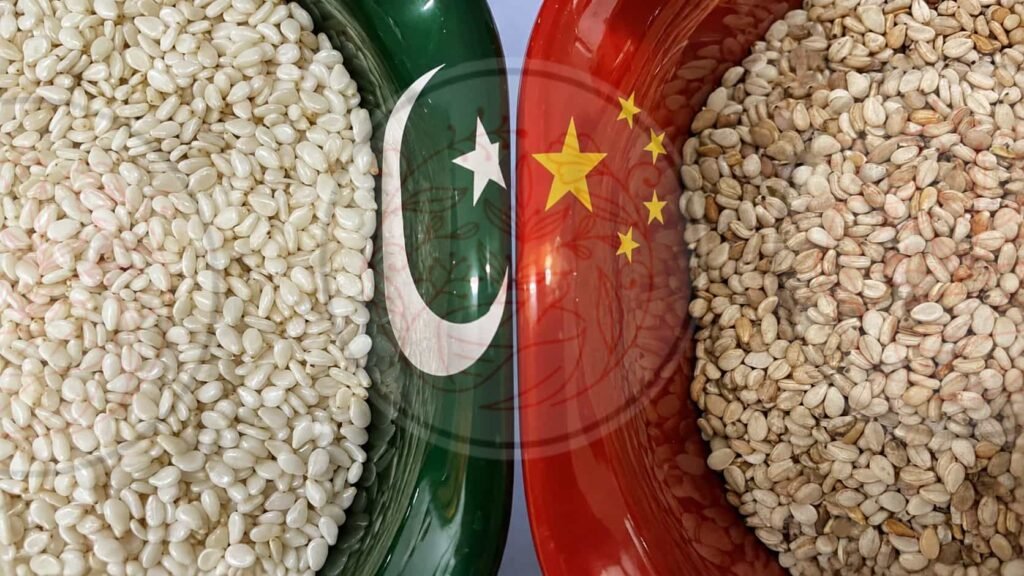
China just bought over $100 million of Pakistani sesame 🌾 and the new crop hasn’t even peaked. Sit with that for a second, because most people reading a trade update expect a slow, dusty number buried in a customs report somewhere. This one isn’t slow. This one is loud. Between January and July 2026, China imported 103,340 metric tons of Pakistani sesame seed worth $105.29 million, and here’s the part that should make every buyer sit up straighter in their chair. Pakistan’s sesame harvest doesn’t even land until early August through September. So this eye watering number was posted before the new crop had fully arrived. Think about what that means. The demand engine was already running hot on last season’s carryover supply, before the fresh, better yielding 2026 to 27 crop even hit the warehouses.
If you sell tahini, halva, sesame oil, or anything that touches a bakery shelf or a supplement label, this is one of those moments where the data is basically waving a flag at you. Not a red flag. More like a “hey, pay attention, timing matters this year” flag. So let’s actually walk through what happened, why it happened now, what’s coming next, and what smart buyers outside China should be doing about it before the window narrows.
| 103,340 MT | $105.29M | +110.8% | +72.2% |
| Sesame exported to China, Jan to Jul 2026 | Total export value | Volume growth year over year | Value growth year over year |
What the numbers actually show 🔍
Let’s be precise, because vague trade headlines are how misinformation spreads and nobody sourcing sesame at scale has time for that. According to the General Administration of Customs of China, Pakistan shipped 103,340 metric tons of sesame seed to China between January and July 2026, and that shipment carried a total value of $105.29 million. Compare that against the same seven month window in 2025, and the jump is not subtle. Volume grew 110.8%, meaning the physical tonnage moving across the border more than doubled. Value grew 72.2%, a slightly smaller jump because per ton prices softened even as the sheer quantity surged. That gap between the two growth rates tells its own story. This wasn’t a price spike pulling buyers in. This was raw, structural demand. China wanted more sesame, full stop, and Pakistan had the supply chain flexibility to deliver it.
Why now, specifically? Two forces collided at the right moment. First, China’s processing industry, everything from tahini producers to oil crushers to the confectionery sector, has been steadily diversifying away from more volatile or geopolitically complicated sourcing regions. Second, Pakistan spent the last couple of harvest cycles proving it could deliver consistent, documented, lab verified sesame at scale, which is exactly the kind of track record that makes a buyer comfortable shifting more volume your way. Put those two things together and you get a market where Pakistan sesame exports China 2026 stopped being a niche trade footnote and became one of the more interesting agricultural export stories of the year.
The 2026 to 27 crop forecast 🌱
Here’s where it gets even more interesting for anyone thinking about the months ahead rather than just the headline. Gopal Khamuani, Chairman of Kanwal Trading Company, laid out the picture for the 2025 to 26 crop year that just closed. Pakistan harvested approximately 310,000 metric tons of sesame seed, and roughly 95% of that entire harvest was exported internationally. That’s a staggering export ratio. Pakistan isn’t sitting on sesame, it’s moving almost all of it out the door, which by itself should tell you how tight and efficient this supply chain has become.
Now look forward. For the 2026 to 27 crop year, industry leadership is projecting total production to climb to roughly 360,000 metric tons, give or take 5%. That’s meaningfully more tonnage heading into an already hungry market. But the more fascinating detail sits underneath that headline number. Cultivated area actually declined by around 15% this season. Less land planted with sesame, yet more sesame coming out of the ground. How does that math work? Yields per acre jumped from around 320 kg to somewhere between 370 and 400 kg, and the reason is refreshingly unglamorous. Favorable, well timed weather through the growing cycle did the heavy lifting. Farmers didn’t need more acreage this year, the plants themselves simply produced more per acre than they have in recent seasons. That’s the kind of efficiency gain that sourcing teams love to see, because it means new crop sesame seeds Pakistan supply is arriving with genuine productivity behind it, not just brute force expansion of farmland.
👉 Quick translation for anyone skimming: less land, better weather, higher yield per acre, and a production forecast that’s climbing even with the smaller footprint. That combination is exactly what buyers hope to see heading into a new procurement cycle.
What this means for buyers outside China 🌍
Okay, so here’s the part that actually matters if you’re not sitting in Beijing placing orders. China imported roughly 58% of Pakistan’s total sesame exports during the 2025 to 26 crop season, and that share held even with substantial existing inventory already sitting at Chinese ports. That’s not a market that’s slowing down its appetite. If anything, the appetite is compounding. So if you’re a tahini producer in the Gulf, a halva manufacturer in Europe, or a bulk distributor stocking up for the year, the honest read is this. Supply confidence heading into the new crop is genuinely strong, the production forecast supports it, the yield story supports it. But the competing demand from China is real, and it’s the kind of demand that can quietly tighten availability for everyone else if buyers wait until the crop has already been allocated.
This is exactly why sourcing teams who move early, right as the August through September harvest window opens, tend to secure better allocation and more predictable documentation timelines than teams who wait until October or November hoping prices soften. Booking a sesame seeds exporter Pakistan bulk relationship before the peak crush of demand hits isn’t paranoia, it’s just reading the trade data correctly. When a market posts a 110.8% volume surge before the new crop has even fully landed, that’s a market telling you exactly how competitive allocation is about to get.
If your team is trying to build a realistic sourcing calendar for the next twelve months, the smartest move is pairing the harvest timing with your own inventory cycle. Buyers who want to buy sesame seeds Pakistan new crop before Chinese demand fully absorbs the fresh harvest are the ones who end up with cleaner lead times and less scrambling in Q4. And for anyone weighing whether Pakistan can realistically scale to match growing order volumes, the 2026 to 27 Pakistan sesame production forecast 2026-27 of roughly 360,000 metric tons is about as reassuring an answer as the data can give right now.
The exporter positioned to move fast on the new crop
This is where Harmain Global comes in, and not in a “let us tell you how great we are” kind of way, more in a practical, logistics reality kind of way. When a market is moving this fast, the exporters who actually benefit buyers are the ones who already have documentation, testing, and container readiness built into their process from day one of the harvest window, not scrambling to assemble it after the crop lands.
Harmain Global has spent recent seasons building exactly that kind of readiness around its sesame program, with Halal certification, export quality grading, batch level Ethylene Oxide free declarations, and Salmonella testing verified per container rather than sampled once and assumed consistent. If you want to see the specs and current documentation standards in detail, you can check this out before placing a new crop order. For buyers specifically vetting sourcing partners against China’s own demand curve, the goal is finding a verified sesame exporter for China buyers that can move on committed volume the moment the August harvest opens rather than waiting for paperwork to catch up mid shipment.
And if your priority is simply making sure the seed itself meets export grade specifications before it ever reaches your processing line, that’s where working with an export-quality sesame seeds Pakistan supplier with per container lab verification actually pays for itself, especially in a season where global buyers are competing harder than usual for the same harvest.
This piece is a direct, timely update to Harmain’s earlier look at the China Pakistan Economic Corridor’s role in the sesame trade, and it’s worth reading alongside that story once it’s live for the fuller supply chain picture.
Ready to lock in new crop sesame before the window tightens?
Whether you’re sourcing for tahini, halva, oil processing, or bulk retail, the team at Harmain Global can walk you through current specs, documentation, and available volume for the 2026 harvest. Reach out through learn more here to start the conversation, or explore the full product range at HarmainGlobal.com. You can also browse everything the company exports at https://harmainglobal.com as a starting point.