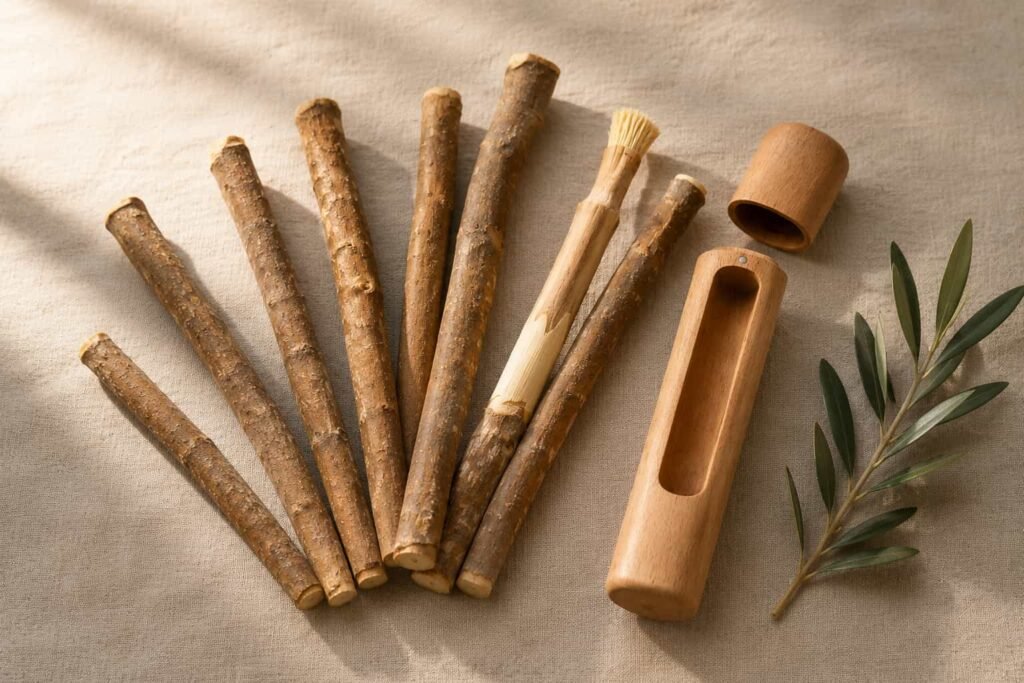
A tree branch that people have been chewing for over a thousand years is quietly becoming one of the more interesting stories in oral care 🌿 Yes really. While toothpaste brands spend fortunes on ad campaigns, the humble miswak stick has been climbing in relevance almost entirely on word of mouth, religious tradition, and a growing pile of dental research nobody bothered to market properly. Nobody sent out a press release when the World Health Organization first acknowledged the stick’s role in oral hygiene decades ago. Nobody threw a party when plastic toothbrush guilt started pushing eco conscious shoppers toward wood and root based alternatives. And yet here we are, watching one of the oldest dental tools on the planet quietly outgrow its niche.
If you sell natural wellness products, run an Islamic lifestyle store, stock a pharmacy chain, or you are building a private label personal care brand and you have not looked closely at miswak market growth 2026 data yet, you are missing a category that keeps showing up in more shopping carts every year, for reasons that are actually easy to explain once you see them laid out.
Why the miswak market is exploding right now
At which point three forces nudge the same door at the same time, and that is typically when a slow burning category of industry evolves into a real one.
Plastic guilt is the first one, and it is no insignificant thing! There are about a billion plastic toothbrushes that get dumped into landfills in the US every year which is made from polypropylene and nylon, both of which also take centuries to decompose. A lot of shoppers, having learned that number, begin hunting for something that grows on a tree instead of leaving a petroleum refinery, and when it comes to low plastic packaging potential (zero), battery requirement (zero) and any synthetic bristle material (zero, so negligible), the stick is as clean an answer as the personal care aisle can provide.
Demography, which is measurable, rather than anecdotal, is the second force. Long term projections from the Pew Research Center show the worldwide Muslim population is growing at approximately double the rate of folks throughout world, on a path to be nearly 30 percent of all human beings on Earth by 2050, up from about 23 percent in 2010. Use of miswak is strongly tied to religious practice across much of that demographic, and particularly around the five daily prayers so the built in demand for this product is not only really large today but one retailers can plan around as well given it expands on a predictable cadence.
The Third Force is the one that has historically been absent; it is the engine that ultimately provides permissions to cautious retail buyers to take the category seriously. So, forget a tradition — Miswak has a paper trail. A simple summary of the 2000 Consensus Report on Oral Hygiene from the World Health Organization was that chewing sticks may legitimately contribute to oral hygiene and warranted further study, and since then, peer reviewed research has continued to support that point of view — and indeed in many cases crediting it directly to the antibacterial components found in Salvadora persica as working against bacteria responsible for causing plaque and cavities. Combine centuries of cultural use, proper scientific upside and clinical literature not falling apart under scrutiny and that is usually the recipe for category growth, rather than a passing fad.
Put this all together and your pretty basic picture. A naturally ballooning demand base, sustainability story sells itself, and enough real science behind it that when you add this to a shelf, no one is just taking your word for it.
Peelu vs Olive miswak, and what actually separates premium from cheap
Ask ten different miswak users which type they prefer and you will get ten definitive answers, and honestly they are all partially right.
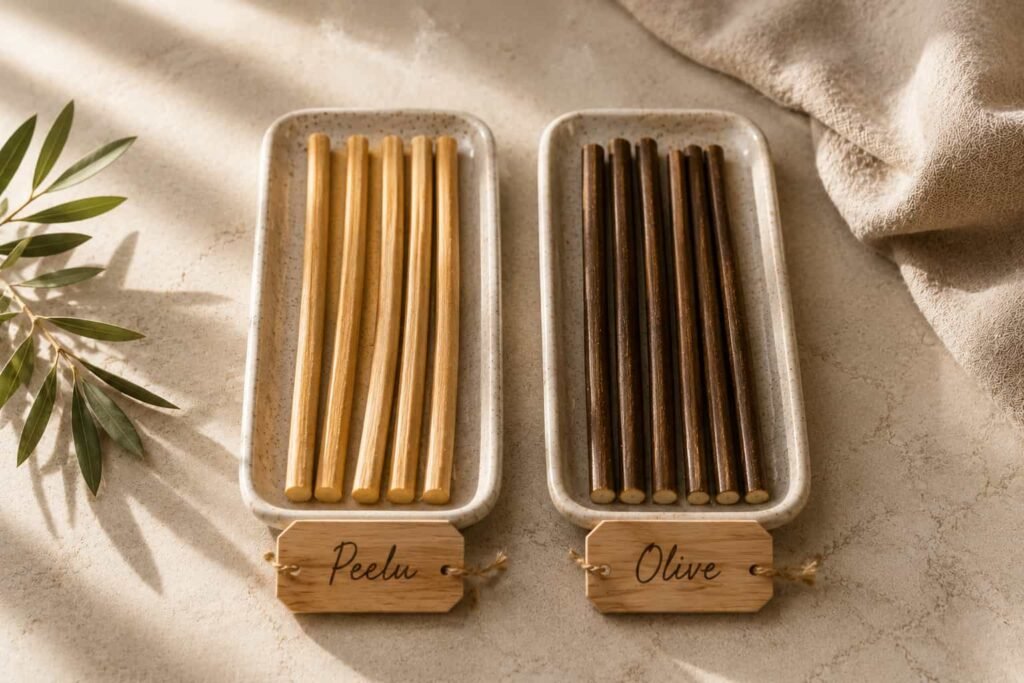
Peelu miswak originates from the tree itself, specifically the species that has been historically most closely associated with the actual word miswak — the Salvadora persica tree — and which is what most of the existing clinical research is actually looking at. Applying it for the first time gives one a naturally spicy, slightly peppery bite, and the fibrous texture brushes into soft bristles very rapidly; its notable mineral profile — naturally occurring fluoride and antibacterial compounds — has been at the heart of most of the published dental research. When sourching from a genuine premium peelu miswak exporter, this is usually the one brand buyers really mean by name when referring to the variety with the greatest research backing and most recognizable as a household word to shoppers who are conscious of Sunnah, making sourcing here matter more than in nearly every other category.
But the olive miswak goes another route. Colloquially referred to as miswak, this is actually harvested from olive trees and not Salvadora persica, the tree species traditionally associated with miswak, so it typically has a milder, smoother chew along with a gentler flavor that first time users often find easier to adapt to and something long term consistent users believe helps whiting and strengthening your gums over long periods. It also targets a somewhat different kind of shopper, too — someone who is new to natural oral care or a retailer creating an entry-level product tier aimed at customers who have only ever used plastic toothbrushes.
Buyers sourcing this variety in bulk require a dependable olive miswak sticks bulk supplier who can maintain consistent texture and moisture content throughout every shipment, because inconsistency is often the very reason a first-time miswak buyer becomes a one-time miswak buyer.
Though, the actual difference between a premium stick and a cheap one rarely comes down to that variety at all. It comes down to processing. At the right maturity a properly sourced stick is sun dried under controlled conditions rather than being rushed, and stored in such a way that it doesn’t dry out so brittle or grow mold before it even makes it to a shelf. These processes are omitted in cheap sticks, which is evident quickly as they splinter while being chewed, go moldy en route, or simply refuse to fray enough to be any use as a brush. That difference between care taken in processing and a corner cut somewhere up the supply chain is game over for an entire category that relies almost entirely on trust and word of mouth.
What wholesale and private label buyers actually need from a supplier
Once a buyer decides the category is real, the conversation shifts fast from is this worth stocking to who can actually deliver it properly, and the answers buyers ask for tend to repeat themselves. Certification comes first, almost always. Halal certification is non negotiable for the Islamic product distributors and GCC facing retailers who make up a huge share of this market, and it needs to be documented, not just claimed. Consistency comes right behind it, because a retailer cannot build a repeat customer on a product that is excellent in one shipment and disappointing in the next.
Packaging has quietly become its own decision point too. The category has split into a few clear formats that buyers now expect to choose between rather than accept whatever shows up. Individually wrapped or vacuum sealed sticks protect freshness for retail shelves and online orders, which matters enormously for anyone trying to get consistent reviews, so sourcing genuinely vacuum-sealed miswak sticks wholesale rather than loose bulk sticks repackaged in house has become a real differentiator. Sticks sold with a small protective holder case appeal to retail and gift buyers who want something that looks intentional rather than rustic. And then there is the straightforward bulk format, sold by volume for institutions, pharmacy chains, and private label brands that are doing their own packaging design and just need dependable raw supply behind it.
Minimum order quantities matter here too, more than buyers often expect going in. A supplier who can flex between a modest trial order and a full container load is worth more to a growing private label brand than one who only speaks in pallet sized numbers from day one. If you are trying to find private label miswak manufacturer partners, ask directly about their smallest workable order before you ask about their biggest one; it tells you a lot about whether they are set up to grow with you.
The supplier already built for this growth
This is exactly the gap Harmain Global’s Miswak Group brand was built to close. Operating out of Hyderabad, Sindh since 1985, Harmain Global has spent four decades as a miswak bulk exporter Pakistan buyers already trust for herbs, spices, dry fruits, and agricultural exports, and the Miswak Group line runs on the same infrastructure, the same third party quality inspection, and the same Halal certification standard that governs everything else the company ships.
The product range is already built around exactly the choices buyers are asking for. Both Peelu and Olive varieties are sourced and processed in house, available as convenient twelve piece retail packs for shoppers who want to try before they commit, and as value packed miswak sticks wholesale bundles for institutional buyers, pharmacy chains, and private label brands scaling up. Every stick is naturally dried, quality checked, and packed to genuinely retail ready standards rather than shipped loose and hoped for the best, which is exactly the kind of reliability the category has been missing as demand climbs.
For a natural oral care supplier Pakistan retailers can build a long term category around, the combination of documented Halal certification, four decades of export experience, and a product range that already covers the retail, gift, and institutional formats buyers are asking for is hard to find bundled together anywhere else. If your shelves, your private label line, or your wellness store still do not carry miswak, the branch behind this whole story has been waiting patiently for you to notice. Miswak Group and Harmain Global are ready whenever you are, so learn more here about the current range, or check this out and get in touch directly to talk about minimum order quantities, packaging options, and sample requests.
Ready to bring miswak into your product line? Contact Harmain Global to request samples, discuss Halal certified bulk pricing, and explore private label packaging options for the Miswak Group range.