Let’s be honest. As soon as you type “how to import ephedra” into Google, the internet responds with a cocktail of ancient forum threads, vague warnings about legality, and suppliers whose sites appear forged on a Nokia circa 2004. You deserve better than that. So here is the accurate, no bull-shit, pharma buyer-approved guide to importing ephedra herb from Pakistan in 2026 — with legality by country; documents you should really be using (hint: it ain’t just COAs); how to smell a counterfeit supplier within three dimensions; and what an SGS certificate would look like.
Grab a coffee. This one is thorough.
Is Ephedra Even Legal to Import? Let’s Start There.
Before anything else, let’s answer the question every serious buyer is quietly panicking about. Yes, ephedra herb is a real, tradeable commodity. Yes, it has been used in traditional medicine for literally thousands of years. And yes, its legal status varies wildly depending on where you are standing on this planet. So let’s go country by country.
United States: Ephedrine alkaloid dietary supplements have been banned by the FDA since 2004 and remain banned. But — and here’s the bit that people miss — importing ephedra herb as a raw herbal good, for use in research or licensed pharmaceutical compounding or traditional Chinese Medicine is a completely separate issue. Ephedra import USA regulations require that your shipment not be intended for over-the-counter dietary supplement use. If your paperwork is clean, your end-use declaration is accurate, and your supplier provides proper documentation, raw ephedra herb can move through U.S. customs legally. Work with a licensed customs broker and a DEA-registered importer if alkaloid content is involved.
European Union: The EU is nuanced here, which should surprise nobody who has ever tried to read an EU directive for fun. Ephedra import Europe laws allow the importation of ephedra herb for traditional herbal medicine purposes under EU Directive 2004/24/EC, but finished products containing ephedrine need marketing authorization. Raw botanical imports for licensed manufacturers are generally permitted with proper documentation, including phytosanitary certificates, a certificate of origin, and compliance with EU customs codes. Some member states have additional national rules, so always confirm with your country’s competent authority (MHRA in the UK, BfArM in Germany, ANSM in France — you get the idea).
UAE: Good news for Gulf buyers. Ephedra’s legal status in the UAE is relatively workable for licensed pharmaceutical and herbal product manufacturers. The UAE Ministry of Health regulates imports of controlled herbal substances. Your supplier needs to provide a certificate of analysis, MSDS, and a phytosanitary certificate. A letter of intent declaring end-use for licensed manufacturing goes a long way. Many Pakistani exporters already have UAE import experience because the corridor is well established.
South Korea: This is where it gets interesting. Ephedra Korea regulations are actually quite structured and favorable for verified importers. Korea’s Ministry of Food and Drug Safety (MFDS) classifies ma huang as a traditional medicine ingredient with defined import pathways. Korean herbal buyers are famously precise about quality verification, which is exactly why they have a long-standing relationship with Pakistani suppliers — check this out to understand that dynamic in full.
Australia: Ephedra Australia restrictions are some of the tightest in the world. The Therapeutic Goods Administration (TGA) controls ephedra very closely. Importation is not impossible but requires significant licensing, and finished supplement products containing ephedra are effectively banned for sale. Raw material imports for pharmaceutical manufacturing by licensed entities are handled on a case-by-case basis. Australia is the one market where you want a local regulatory consultant on your team before you do anything else.
So, in summary, can you import ephedra legally? In most major markets, yes — if you have the right documentation, the right supplier, and the right end-use. The keyword in that sentence is “right.”
The Document Checklist That Will Save Your Shipment
Here is something that experienced importers know that first-timers find out the hard way: a shipment without proper documentation is not a shipment. It is a very expensive problem sitting in a customs warehouse, slowly costing you money. Let’s make sure that is not you.
When you import ephedra from Pakistan, the paperwork package your supplier should be providing includes, at a minimum, the following documents. Think of this as your non-negotiable starter pack.
Phytosanitary Certificate from the Department of Plant Protection in Pakistan. This indicates to your customs authority that the plant material has been checked for pests and diseases, is free from this risk, and meets other phytosanitary import requirements of the country. Otherwise, a lot of countries will not allow entry. Not delay. Refuse.
Certificate of Origin from the Pakistani trade body, like TDAP(Trade Development Authority of Pakistan) or Chamber of Commerce. It helps in the customs tariff classification and is essential for any buyer looking to have the country of origin proven within their supply chain logs. establishing that the herb was farm-grown and processed in Pakistan.
Certificate of Analysis (COA) from an accredited or independent third-party laboratory. This should consist of alkaloid concentration (ephedrine, pseudoephedrine), heavy steel testing, pesticide residue screening, microbial contamination levels, and moisture content.
Material Safety Data Sheet (MSDS) for the herb in question. This is standard for any raw material shipment and is required by customs in most markets, particularly for substances with known pharmacological activity. The MSDS covers handling, storage, hazard classification, and emergency response data.
SGS Certificate (or equivalent third-party inspection certificate): This deserves its own paragraph because it is critically misunderstood. An SGS certificate for herbal exports is not just a sticker that says “this looks fine.” A proper SGS certification for herbs should include the inspection date and location, the name and specifications of the product, sampling methodology, test methods used, and a quantitative breakdown of key parameters against agreed specifications. It should reference the lot number and match the invoice and packing list. If someone sends you a one-page PDF that says “SGS Certified” with no test data, that is theater, not compliance.
Commercial Invoice and Packing List with HS code correctly declared. For the ephedra herb, the HS code typically falls under Chapter 12 (oil seeds, plants for pharmaceutical use). Misclassification here is one of the most common ephedra shipment rejection triggers at customs — learn more here.
Letter of Intent / End Use Declaration: Increasingly requested by customs in the USA, Australia, and Korea. This is a signed statement from your company declaring the specific intended use of the imported herb (pharmaceutical manufacturing, licensed TCM practice, research, etc.). It adds a layer of legal protection for both you and your supplier.
How to Verify a Pakistani Ephedra Supplier (Without Getting on a Plane)
Here is the truth about sourcing from Pakistan that the internet will not tell you directly: Pakistan has some of the world’s most high-quality ephedra growing in its mountain regions, and it also has a small number of people who will happily send you photos of someone else’s warehouse and call it theirs. The gap between a genuine ephedra herb bulk supplier and someone cosplaying as one can be surprisingly hard to spot if you do not know what to look for.
Start with their export registration. Any legitimate Pakistani herbal exporter must be registered with TDAP (Trade Development Authority of Pakistan). Ask for their TDAP export license number and verify it. This takes you five minutes and costs you nothing. If they cannot provide it or get weirdly vague about it, the conversation is over.
Ask for their GMP certification status. While not every Pakistani herbal exporter holds a full GMP certificate, any supplier claiming pharmaceutical-grade output should have at a minimum a facility inspection report or a GMP-compliance statement from a credible auditing body. A GMP-certified herbal supplier in Pakistan operating at export quality will have no hesitation in sharing this.
Request a recent third-party lab report — not from their own in-house lab, but from an accredited external lab. The COA should be less than six months old and should be for the specific batch you are buying, not a generic annual test from a different lot. Ask them to send you the raw lab report, not a formatted version that looks like it was designed in PowerPoint.
Do a video call. This sounds obvious, but it is skipped constantly. Get on a call and ask them to show you their facility, their drying process, and their packaging area. A real operation will do this without drama. A fake one will suddenly have “connection issues.”
Check their export history. Ask for references from previous international buyers in your target market. A supplier who has been buying ma huang wholesale to Korean or European buyers for years will have verifiable client references. Ask for company names and reach out independently, not through the links the supplier gives you.
Search for their company on Pakistan’s corporate registry (SECP — Securities and Exchange Commission of Pakistan). A legitimately registered business will appear here. This takes thirty seconds.
Red Flags That Should Make You Run, Not Walk
Let’s talk about the things that should end a supplier conversation immediately.
If a supplier cannot provide a phytosanitary certificate, stop. Full stop. This document is issued by the Pakistani government. It is not optional for any legitimate export. If they say “we can get it after payment,” that is a catastrophic red flag.
If their pricing is mysteriously 40 to 60 percent below every other quote you have received, ask yourself why. Genuine export-quality ephedra herb has real production and documentation costs attached to it. Suspiciously cheap pricing usually means one of three things: it is not what they say it is, it has no documentation, or both.
If they pressure you to pay via personal bank transfer or Western Union instead of a standard business bank wire or LC (letter of credit), walk away. Legitimate export businesses operate through commercial banking channels.
If the COA they send you has no lab name, no accreditation number, no methodology reference, and no contact details for the issuing lab, you are looking at a document that was made in Microsoft Word, not in a laboratory.
If their email domain is a free Gmail or Yahoo address and their website was clearly built in two hours, that alone is not disqualifying — but combined with any of the above, it tells a complete story. Harmain Global operates as a fully registered export company with verified documentation, third-party lab testing, and an established track record across Gulf, Korean, and European markets. That is the standard you should be holding every potential supplier to.
You can also read about common importing pitfalls in more detail — this piece on ephedra herb industry challenges lays out what experienced buyers already know.
What the Whole Process Actually Looks Like
Let’s zoom out and map the real journey of a successful ephedra import, from first inquiry to shipment received.
Step one is market compliance verification. Before you contact a single supplier, confirm the legal pathway in your country for importing raw ephedra herb. Get written confirmation from your regulatory body or customs broker about the HS code, required documents, and any licensing you need on your end. This step takes one to two weeks, but saves you everything later.
Step two is supplier qualification. Use the verification steps above. Request documents, do the call, check the registry. Narrow down to two or three candidates maximum before requesting commercial samples.
Step three is sample evaluation. A real supplier will send you a certified sample batch with a matching COA. Have that sample independently tested by a lab in your country against the supplier’s COA. If the results match within standard tolerances, you have a qualified supplier. If they do not, you have just saved yourself from a very expensive mistake.
Step four is commercial negotiation. Agree on specifications, packaging, labeling requirements, lot traceability, and documentation package in writing. Get everything in a signed proforma invoice or purchase agreement.
Step five is shipment and customs clearance. Work with a freight forwarder who has experience with herbal raw material imports in your market. Have all documents reviewed before the shipment departs Pakistan. Common ephedra customs clearance issues arise from document mismatches — the product name on the COA should match exactly what is on the invoice, which should match the packing list, which should match the phytosanitary certificate. Every single line.
Step six is receipt and QC. Upon arrival, test the received batch against your specifications. Keep traceability records. This is not bureaucracy — this is how pharmaceutical supply chains maintain integrity.
The whole journey of ephedra from mountain to medicine shelf is more involved than most buyers initially expect, but when done right, it is also entirely repeatable and scalable.
Why Pakistan, Specifically?
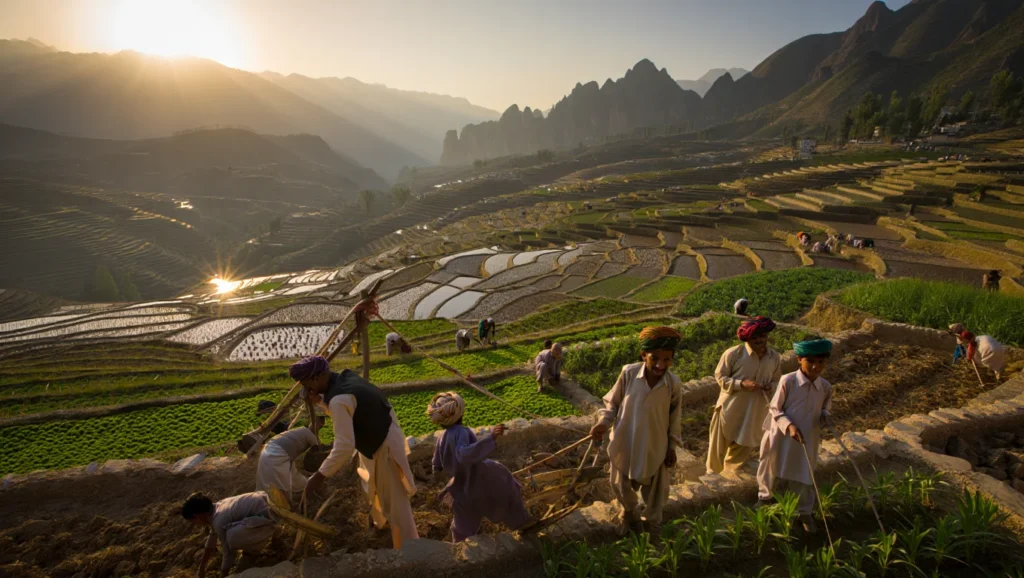
Because the ephedra that grows in Pakistan’s mountainous northern regions — the same altitude and climate that has made the ephedra herb a cornerstone of traditional medicine since before most modern countries existed — has a naturally high alkaloid profile. The elevation, the cold, dry climate, and the traditional harvesting knowledge passed through generations produce a raw material that meets pharmaceutical buyer expectations in ways that lower-altitude or greenhouse-grown alternatives simply do not.
Pakistan’s export infrastructure for medicinal herbs has also matured significantly. Suppliers who have been in the game for more than a decade now operate with SGS certifications, halal certifications, and GMP-aligned processing facilities that would not look out of place in a European supplier audit. The value proposition is real — premium raw material, competitive pricing, and a direct export pathway with established regulatory corridors into the Gulf, Korea, EU, and UK markets.
The key, as with everything in international trade, is doing your homework on which supplier in Pakistan you are trusting your supply chain to.
Ready to Talk to a Supplier Who Has All of This Sorted?
Harmain Global is a Pakistan-based ephedra herb exporter operating with full export documentation, third-party lab COAs, halal certification, phytosanitary certificates, SGS inspection, and an export track record across multiple international markets. Whether you are proactively sourcing ephedra herb in bulk for pharmaceutical manufacturing or finding a reliable supplier of herbal extracts and also herbs for the first time, the documentation package is already prepared, whilst the senior team is answering genuine queries from real buyers.
Visit https://harmainglobal.com to check out product features, ask for samples, or talk to the export team directly. If you have specific regulatory requirements for your market, they will walk through documentation compatibility with you before you commit to anything.
That is how a trustworthy supplier behaves. Everything else is noise.