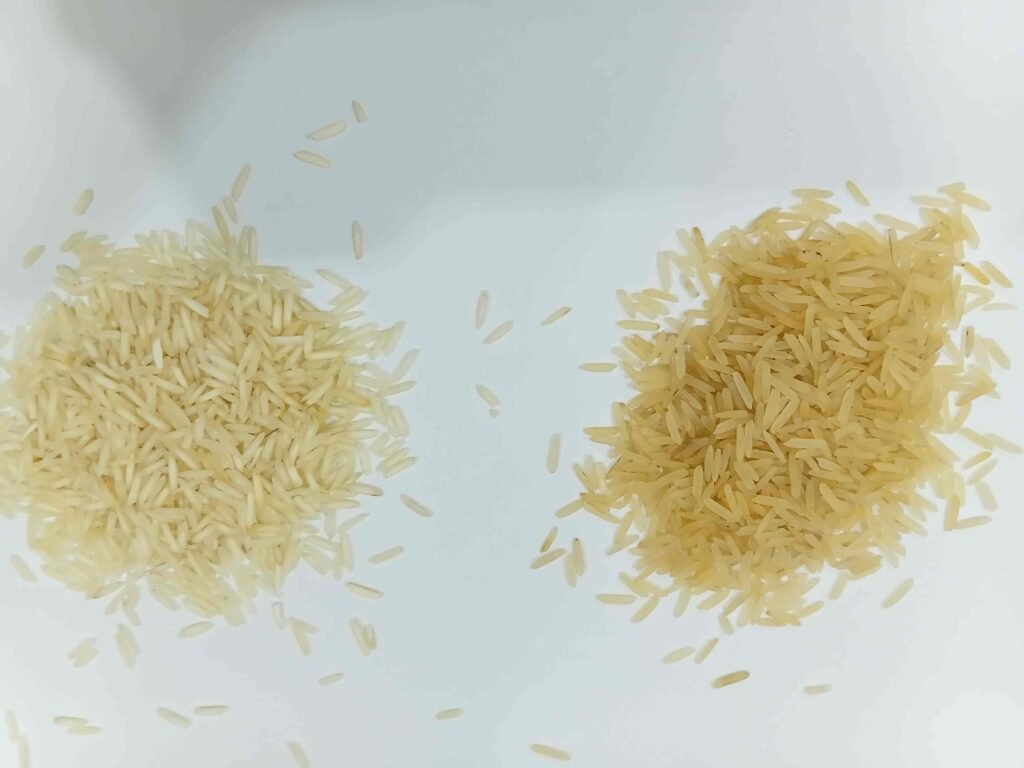
“1121 Basmati” isn’t a single product — it’s a variety that comes in at least four commercially distinct processing formats, and each one performs differently in the pot, on the shelf, and in the buyer’s target market. A restaurant supplier and a European grocery chain sourcing the same variety can need completely different formats, and requesting a quote for “1121” without specifying which one leads to samples that don’t match the end use — and a longer sales cycle than necessary. Here’s how the four formats actually differ, and which buyers each one fits.
Steam 1121: The Everyday Workhorse
Steam-processed 1121 undergoes a light steaming step before milling, without the full soaking and pressure-parboiling that defines Sella processing. This keeps the grain closer to raw Basmati in color — bright white — while improving grain integrity slightly over fully raw milled rice.
Cooking behavior: Steam 1121 cooks relatively quickly, produces good grain elongation, and delivers the characteristic Basmati aroma clearly, since the light processing doesn’t suppress the 2AP aroma compound the way heavier parboiling can. Grain separation after cooking is good but slightly less pronounced than Sella formats.
Where it fits: Steam is the default choice for everyday retail rice, foodservice back-of-house use where turnaround speed matters, and price-sensitive markets where buyers want strong aroma without paying a premium for the extended shelf-stability and grain-firmness benefits of parboiling. It’s a strong fit for EU and UK grocery private-label lines, where consumers expect a fragrant, familiar-looking white Basmati rather than the golden hue of Sella formats.
Creamy Sella: The Grain-Integrity Choice
Sella processing involves soaking paddy, steaming or parboiling it under pressure, and then drying before milling. This drives starch gelatinization inside the grain, which strengthens grain structure significantly and produces the light cream/ivory color that gives “Creamy Sella” its name — a lighter parboil than Golden Sella, without the deeper amber tone.
Cooking behavior: Creamy Sella holds its shape exceptionally well under extended or high-heat cooking, resists breaking, and produces long, well-separated grains — making it forgiving for cooks who aren’t precisely timing water ratios. Aroma is present but slightly muted compared to Steam, since parboiling reduces some volatile aroma compound intensity. Elongation on cooking is strong, often marketed as a key selling point.
Where it fits: Creamy Sella is a strong match for foodservice and restaurant supply, where kitchens are cooking large batches and need forgiving, non-mushy rice that holds up on a steam table for service hours. It’s also a preferred format across much of the Gulf market, where Sella’s grain firmness suits the region’s biryani and pulao cooking styles and long serving times at large gatherings.
Golden Sella: The Biryani Standard
Golden Sella takes the same pressure-parboiling process as Creamy Sella but with a longer or higher-temperature soak and parboil cycle, producing the deeper golden-amber color it’s named for. That deeper processing also drives grain firmness and elongation further than Creamy Sella.
Cooking behavior: Golden Sella delivers the strongest grain separation and the most dramatic cooked-grain elongation of the four formats, along with excellent resistance to breaking or clumping — the properties that make it the preferred format for biryani specifically, where distinct, non-sticky, elongated grains layered with meat and spices are the entire point of the dish. Aroma is present but noticeably more muted than Steam, since the extended parboiling process reduces 2AP retention more than lighter processing methods.
Where it fits: Golden Sella is the default choice for biryani-focused foodservice, ethnic grocery chains serving South Asian and Middle Eastern communities, and Gulf market bulk buyers, where its color and cooking behavior match consumer expectations built around specific traditional dishes. It’s less commonly the first choice for general Western grocery retail, where consumers are more accustomed to white rice and may read the golden hue as unfamiliar without additional label education.
Parboiled: The Bulk and Storage Choice
“Parboiled” as a category overlaps significantly with Sella processing but is often used commercially to describe a broader, sometimes less premium-graded parboiling process aimed at bulk volume rather than the specific color and grain-elongation targets of Creamy or Golden Sella. Parboiling’s core commercial benefit is nutritional retention and storage stability — the process pushes some nutrients from the bran into the grain itself and improves resistance to insect damage and moisture-related spoilage during long storage or shipping periods.
Cooking behavior: Parboiled rice generally cooks with strong grain firmness and resists overcooking, similar in principle to Sella formats, though commercial parboiled grades marketed simply as “parboiled” rather than branded Sella tiers may carry more variability in broken grain percentage and color consistency batch to batch.
Where it fits: Parboiled is the practical choice for high-volume bulk buyers, food processors, and distributors prioritizing shelf stability and cost efficiency over the tighter cosmetic and elongation specifications that premium Sella branding commands. It’s a common format for large-scale foodservice distribution and government or institutional bulk procurement.
Matching Format to Market and Pack Format
A few patterns hold consistently across buyer types:
- Gulf markets generally favor Golden Sella and Creamy Sella, driven by biryani and pulao demand and a cultural preference for the firmer, longer-holding grain these formats deliver.
- EU and UK grocery buyers more often favor Steam 1121 for retail shelf placement, since it matches consumer expectations for white, aromatic Basmati, with Sella formats typically positioned as a secondary or ethnic-aisle SKU rather than the primary offering.
- Restaurant and foodservice supply frequently splits between Creamy Sella (for forgiving, general-purpose cooking) and Golden Sella (specifically for biryani-focused menus), rather than committing to a single format across an entire kitchen.
- Private-label retail brands should decide format based on their target shelf: a mainstream grocery private-label line usually performs better with Steam, while a South Asian or Middle Eastern specialty retail line should default to Golden Sella.
On the specification side, moisture and broken grain percentage matter across all four formats, but tolerance expectations differ: retail pack formats (typically 1kg-10kg consumer bags) generally demand tighter broken grain limits and lower moisture for shelf appearance and extended shelf life, while bulk foodservice and institutional packing (25kg-50kg sacks) can often accept a slightly wider broken grain tolerance in exchange for better pricing, since the rice is consumed quickly rather than sitting on a retail shelf.
Choosing the Right Format Before You Quote
The practical takeaway for buyers: decide your target market and end-use first, then request the format that matches it — not the other way around. A biryani-focused Gulf distributor requesting Steam 1121 samples, or a UK grocery chain requesting Golden Sella for a mainstream shelf placement, will both end up needing to restart the sampling process once the mismatch becomes clear.
Explore the full specification range across 1121 Basmati rice formats, or browse our complete Basmati rice products line. If you’re not sure which format fits your market, request rice specifications and we’ll match the format, moisture, and broken grain tolerance to your actual end use before you commit to a sample order.