
Every supplier you have ever spoken to says “export quality”. We have said it ourselves. On its own the phrase tells you almost nothing, because no regulator, standards body or trade association issues a certificate that says “export quality”. It is a promise, and a promise is only as good as what sits behind it. This article breaks the phrase into four layers you can test: what the law requires, what the specification requires, what evidence proves it, and whether the next lot will match this one. If a supplier cannot answer for all four, the phrase is decoration.
Layer 1: The law is the floor
Every destination market has legal minimums, and they are the least a shipment must meet to be allowed in. They are not a mark of quality. Pine nuts going into the EU are a good example. According to the CBI market entry guide for pine nuts, cadmium is the main reason for pine nut rejections, and the limit is 0.30 mg/kg. A nickel limit of 10 mg/kg has applied since 1 July 2025, added through an amendment to Regulation (EU) 2023/915. Aflatoxin limits depend on how the nuts are used: in-shell pine nuts for further processing may contain up to 5.0 µg/kg aflatoxin B1 and 10.0 µg/kg total, while shelled nuts sold to consumers or used as ingredients are held to 2.0 and 4.0 µg/kg.
Two things follow. A supplier who says “we meet EU limits” has told you the minimum, and the minimum is not what you are paying a premium for. The limits also move. The same CBI guide advises rechecking aflatoxin, cadmium and nickel limits before each season and for each new origin, supplier or lot. If your supplier quotes a law, ask which version and from which date.
Layer 2: The specification is where numbers appear
A specification is a set of numbers a product has to meet that goes beyond what the law requires. Some come from standards bodies. ISO 972:1997 is the international specification for whole or ground chillies and capsicums. It was last reviewed and confirmed in 2018, so it remains current. It sets limits on extraneous matter and on unripe, marked or broken fruit in whole chillies. Others come from trade associations. The American Spice Trade Association’s Cleanliness Specifications set limits on extraneous matter for spices, seeds and herbs coming into the US, and were designed to meet or exceed the FDA’s Defect Action Levels.
Many specifications are simply the numbers a supplier and buyer agree in a contract. That is fine, provided the numbers are written down. A specification that says “clean, bold, good colour” is an opinion. One that says “moisture 8 to 10 percent, foreign matter 0.5 to 1 percent” can be tested, argued over and enforced.
Layer 3: Evidence is a certificate you can match to a lot
A number only counts if somebody measured it. Evidence means a certificate of analysis from a named, accredited laboratory, matched to the batch you are buying, plus a pre-shipment sample that behaves the same way when you test it yourself. Three things go wrong here. The certificate belongs to a different lot. The certificate is a product-level average rather than a measurement. Or the laboratory is not named, so nobody can check it.
On our side, chilli lots are tested at an ISO/IEC 17025-accredited laboratory with a batch-specific certificate, and licorice root is tested by HPLC for glycyrrhizin, per batch, by SGS Pakistan or Bureau Veritas. We say this plainly because you should be able to ask any supplier, including us, to show the same thing. A certificate for a lot that left the warehouse last spring is a nice piece of paper and nothing more.
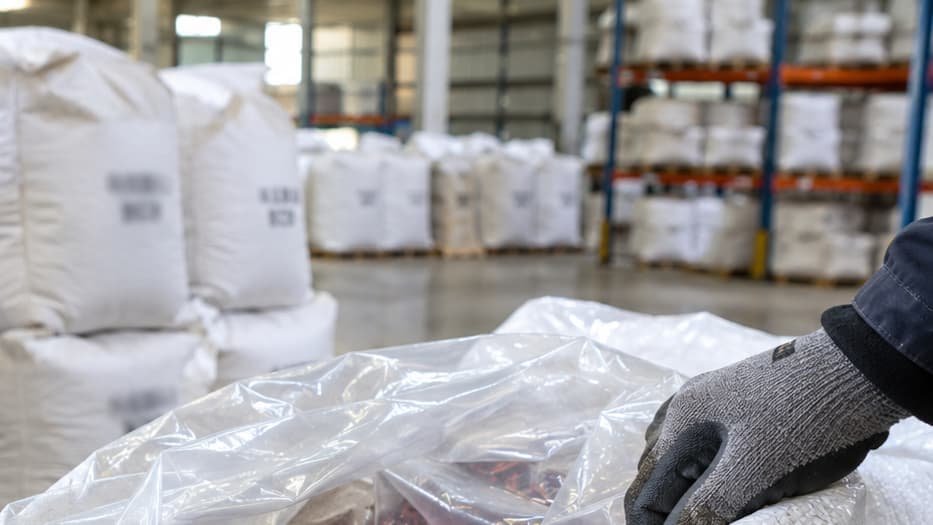
Layer 4: Consistency is lot two matching lot one
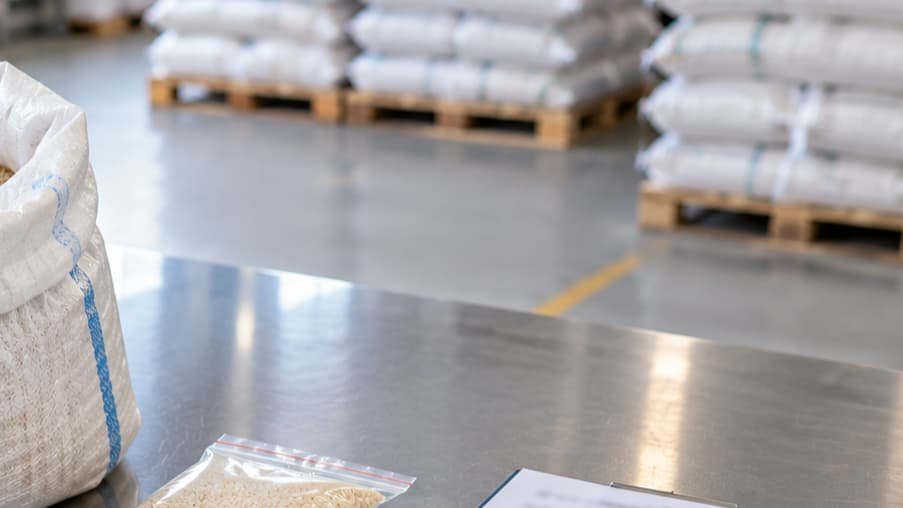
The test that separates a supplier from a one-off shipment is the second order. Consistency has a mechanical side: lot codes on every bag that trace back to a mill or farm, a processing date, and a test record you can request. Our rice bags carry the batch number and packing date, and each container is traced to a specific mill and production date. It also has a protective side. Moisture is the usual way a good lot becomes a bad one in transit, which is why our sesame and cut licorice go into heat-sealed moisture-barrier liners before the outer bag, and why licorice powder travels in multi-layer barrier bags.
Our export quality, in numbers
Publishing our own numbers is the only fair way to ask you to hold us to them. The tables below are the specifications on our live product pages as of 24 October 2026. Ranges are specification bands, not averages. If your application needs a tighter band, tell us at enquiry stage and we will test current stock against it before we send a sample.
Chilli: Kunri Hybrid, whole
| Parameter | Specification |
|---|---|
| Colour | Bright red to deep red |
| Length | 6–14 cm |
| Moisture | Max 8–10% |
| Purity | Min 98–99% |
| Foreign matter | Max 0.5–1% |
| Broken pods | Max 3–5% |
| Pungency | 80,000–100,000 SHU |
| Shelf life | Up to 18–24 months, cool and dry |
Kunri Hybrid is sold as a separate quality from traditional Kunri Long and Dundicut. If you need a different pungency range, the grade matters more than the origin, so specify the variety and grade together.
Sesame seeds
| Parameter | Machine cleaned (unhulled) | Hulled sortex grade |
|---|---|---|
| Purity | ≥ 99.0% | ≥ 99.95% |
| Foreign matter | ≤ 1.0% | ≤ 0.05% |
| Moisture | ≤ 6% | ≤ 5% |
| Oil content | 48–52% | 50–55% |
| Free fatty acids | ≤ 2.0% | ≤ 1.5% |
| Aflatoxin B1 / total | ≤ 4 / 10 µg/kg | ≤ 4 / 10 µg/kg |
| Salmonella | Absent in 25 g (n=5) | Absent in 25 g (n=5) |
| Ethylene oxide | Not detected | Not detected |
| Shelf life | 24 months | 18 months |
The two grades differ on purpose. Tahini makers care most about oil content and purity, bakers about uniform colour, so the same seed is graded two ways.
Rice: grain length, broken grain and moisture
| Parameter | Super Kernel basmati | PK-386 | IRRI |
|---|---|---|---|
| Average grain length | 7.0–7.5 mm (pre-cooked) | 6.8–7.2 mm | 6.0–6.6 mm |
| Broken grains | Max 5% premium, 7% standard | Max 5% premium | 1–5% by grade |
| Moisture | 10% | 10% | 10% max |
Licorice root: three grades
| Parameter | Premium | Standard | Industrial |
|---|---|---|---|
| Glycyrrhizin | ≥ 4.0% (Ph. Eur.), HPLC per batch | 2.0–4.0%, on COA | ≥ 1.5% |
| Moisture | < 10% | < 12% | < 13% |
| Purity | 98–99% | 95–98% | 90–95% |
| Foreign matter | < 1% | < 2% | < 3% |
The licorice table shows the point of this whole article. The same root can be sold at three grades with three different glycyrrhizin ranges, and all three could be called “export quality”. The number on the batch-specific COA is what you are actually buying.
The six questions, and a card to keep
Put these to every supplier before you accept the phrase. They are the four layers turned into questions: which law and which specification are you quoting, which laboratory tested it and is it accredited, is the certificate for this batch, can I test a sample against it, how is the lot traced, and what happens if the result is out of specification. We have put them on a one-page card with a line or two on what a good answer looks like. Download the Buyer’s Six Questions card (PDF).
If you want any of the specifications above tested against your own requirement, write to us at info@harmainglobal.com or through our contact page.